


Finding a lighting solution that balances comfort, safety, and savings can feel daunting for homeowners ready to upgrade their homes. As smart lighting technology blends wireless sensors, automation, and mobile connectivity, it transforms ordinary spaces into adaptive environments with responsive features. This guide demystifies what smart lighting truly means and clarifies why embracing these advanced systems delivers greater control, efficiency, and peace of mind for anyone seeking an easy home improvement.
| Point | Details |
|---|---|
| Understanding Smart Lighting | Smart lighting systems integrate technology to create dynamic, adaptive environments that enhance efficiency, comfort, and safety beyond simple bulb replacements. |
| Types of Smart Lights | Variants such as bulb-based systems, light strips, and motion-activated lights cater to diverse lighting needs and enhance overall home functionality. |
| Energy Efficiency Benefits | Automated features in smart lighting can significantly reduce energy consumption and costs while contributing to environmental sustainability. |
| Safety and Lifestyle Enhancements | Smart lighting systems improve security through automated features and promote well-being by supporting natural circadian rhythms with customized lighting options. |
Smart lighting represents more than just switching out traditional bulbs - it’s a technological revolution transforming how homeowners interact with illumination. Smart lighting systems leverage advanced wireless technologies to create responsive, adaptive home environments that enhance comfort, efficiency, and safety.
At its core, smart lighting is part of the Internet of Things network, integrating wireless sensors, automation technologies, and mobile device connectivity. These sophisticated systems go far beyond simple on/off functionality, offering dynamic features that traditional lighting cannot match:
Many homeowners mistakenly believe smart lighting is just about LED replacements or unnecessary technological complexity. However, modern smart lighting technologies represent an integrated system designed to improve living spaces sustainably. These systems consider human behavior, energy efficiency, and personalized environmental control.
By understanding smart lighting as an interactive, responsive technology, homeowners can transform their living spaces from static environments into adaptive, intelligent systems that respond to their unique needs and preferences.
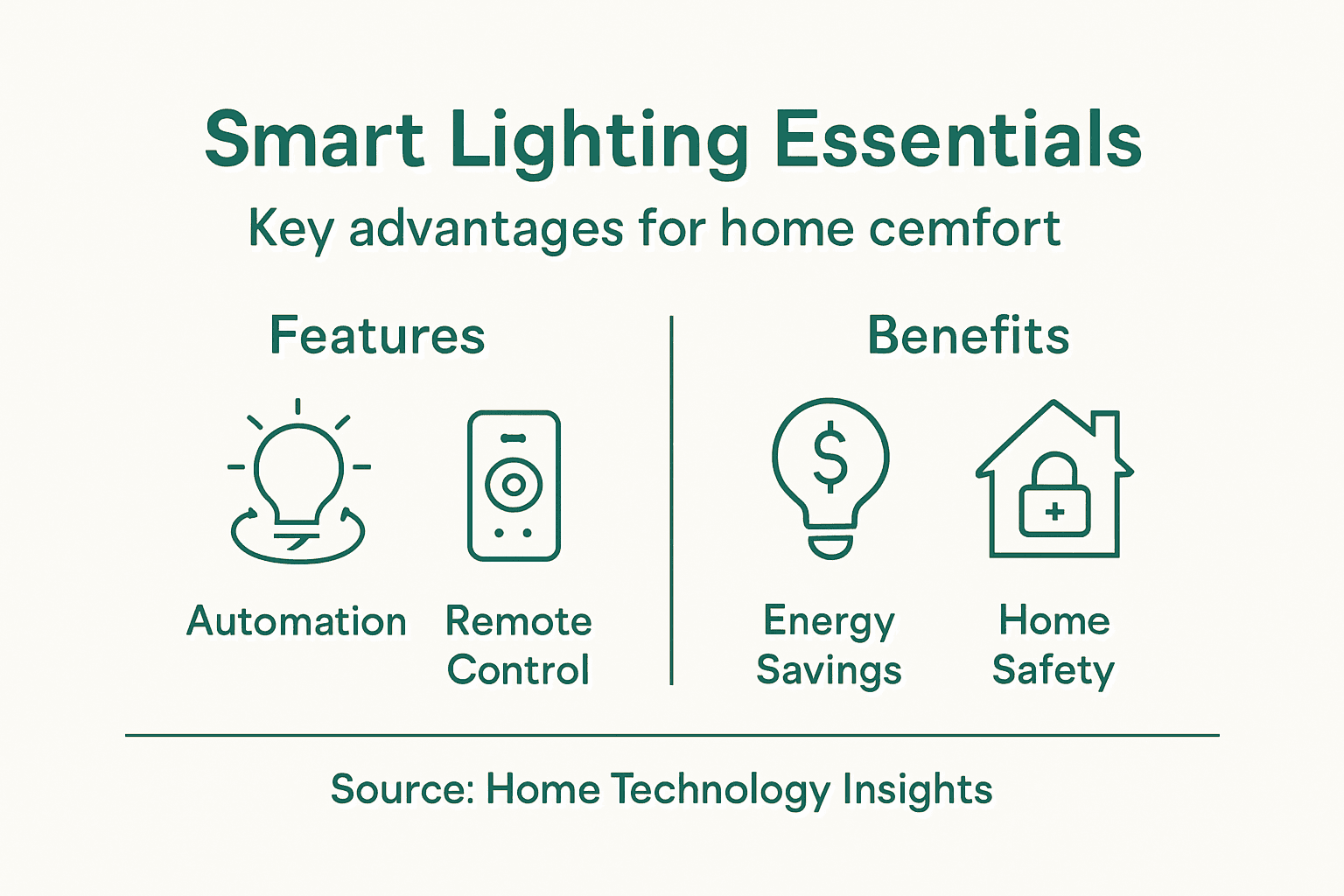
Pro tip: Start your smart lighting journey by selecting one room and experimenting with a single smart bulb or plug to understand the technology’s potential without overwhelming yourself.
Smart lighting technology has evolved dramatically, offering homeowners unprecedented control and flexibility in home illumination. Modern smart lights come in various forms, each designed to address specific residential lighting needs and enhance overall home functionality.
The primary categories of smart lights include:
Smart lighting networks leverage advanced LED technologies with embedded sensors and wireless communication protocols. These systems enable complex features like automatic dimming, color temperature adjustment, and remote management through smartphone applications or voice assistants.
Understanding how smart lights communicate is crucial for homeowners. Most smart lighting systems utilize wireless protocols such as Zigbee, WiFi, or Bluetooth Low Energy, allowing seamless integration with home automation platforms. This connectivity transforms traditional lighting from a simple on/off function to an intelligent, responsive network that adapts to users’ preferences and daily routines.
Here’s a concise comparison of common smart light types and their best use cases:
| Smart Light Type | Typical Placement | Key Advantage |
|---|---|---|
| Bulb-based systems | Bedrooms, living rooms | Easy installation and flexibility |
| Light strips | Behind TVs, cabinets | Creative accents and ambiance |
| Plug-in smart modules | Table or floor lamps | Makes existing lamps smarter |
| Hardwired fixtures | Ceilings, hallways | Permanent, high-quality lighting |
| Motion-activated lights | Entryways, garages | Enhanced security and safety |
Pro tip: Start by selecting smart lights compatible with your existing home ecosystem to ensure smooth integration and minimize technical complications.
Smart lighting systems represent a quantum leap beyond traditional illumination, offering homeowners unprecedented flexibility and intelligent control. These advanced technologies transform lighting from a basic utility into a dynamic, responsive home environment that adapts to individual preferences and lifestyle needs.
Smart lighting control systems enable multiple interaction modes that revolutionize home lighting management. The core features include:
The sophistication of modern systems lies in their ability to learn and anticipate user requirements. Intelligent control interfaces allow homeowners to create complex lighting scenes that can be triggered by multiple conditions - from sunset detection to specific room occupancy patterns.
Advanced automation goes beyond simple on/off functionality. These systems utilize complex rule-based algorithms that optimize energy consumption while maintaining optimal comfort levels. By integrating environmental sensors and user preferences, smart lighting can automatically adjust illumination to create the perfect ambiance for any activity, time of day, or personal mood.
Pro tip: Start with a single room’s smart lighting setup to understand the technology’s potential before implementing a whole-home system.
Smart lighting technologies represent a revolutionary approach to reducing home energy consumption and minimizing environmental impact. By leveraging advanced sensor technologies and intelligent design, these systems offer homeowners unprecedented opportunities to dramatically cut electricity costs while maintaining optimal lighting conditions.
Natural light optimization strategies demonstrate significant potential for energy reduction, with research indicating potential savings up to 30% compared to traditional lighting systems. The key energy-saving mechanisms include:
Adaptive lighting controls can reduce power consumption by up to 96%, transforming lighting from a static utility to an intelligent, responsive system. These technologies not only provide substantial financial benefits but also contribute to broader environmental sustainability efforts by significantly reducing carbon emissions.

Beyond immediate cost savings, smart lighting investments offer long-term economic advantages. The initial setup costs are quickly offset by reduced electricity bills, improved bulb longevity, and decreased maintenance requirements. Homeowners can expect comprehensive energy management that adapts to their lifestyle while providing substantial financial and environmental returns.
Pro tip: Calculate your potential energy savings by comparing your current lighting costs with a smart lighting system’s estimated consumption before making an investment.
Smart lighting technologies transcend traditional illumination by offering comprehensive safety and lifestyle improvements that protect and enhance home environments. These intelligent systems transform living spaces into responsive, secure ecosystems that adapt to homeowners’ unique needs and security requirements.
Smart connected lighting systems provide sophisticated safety features that go far beyond conventional lighting solutions. The key security and lifestyle enhancements include:
Intelligent lighting management dramatically improves home safety by creating dynamic, responsive environments. These systems can detect and illuminate potential security risks, provide visual deterrence against intruders, and create seamless transitions that make homes feel more secure and comfortable.
Beyond security, smart lighting offers profound lifestyle enhancements by supporting human circadian rhythms, reducing eye strain, and creating personalized environments that adapt to individual preferences. The technology enables homeowners to design lighting experiences that promote wellness, productivity, and emotional well-being through precise control and intelligent automation.
The following table summarizes how smart lighting enhances both energy efficiency and home safety:
| Enhancement Area | Smart Lighting Role | Example Benefit |
|---|---|---|
| Energy Efficiency | Automated dimming and scheduling | Reduces electricity use, costs |
| Safety & Security | Motion-activated, simulated presence | Deters intruders, increases awareness |
| Lifestyle Comfort | Circadian rhythm support, customization | Promotes sleep and well-being |
| Cost Savings | LED longevity and lower maintenance | Fewer replacements, lower bills |
Pro tip: Create multiple lighting scenes for different activities to maximize both safety and lifestyle benefits of your smart lighting system.
Modern homeowners face the challenge of upgrading from traditional lighting to intelligent systems that boost comfort, safety, and energy efficiency. This article highlights key pain points such as complicated installations, lack of automation, and missed opportunities for savings and security. At https://tryilluminate.co, we understand these challenges and provide easy, wireless smart lighting options that bring your home into the future without hassle. Experience automated brightness adjustments, motion-activated lights, and customizable tones designed to fit your lifestyle.
Take control of your home environment with our Smart Motion Sensor Lights Collection.
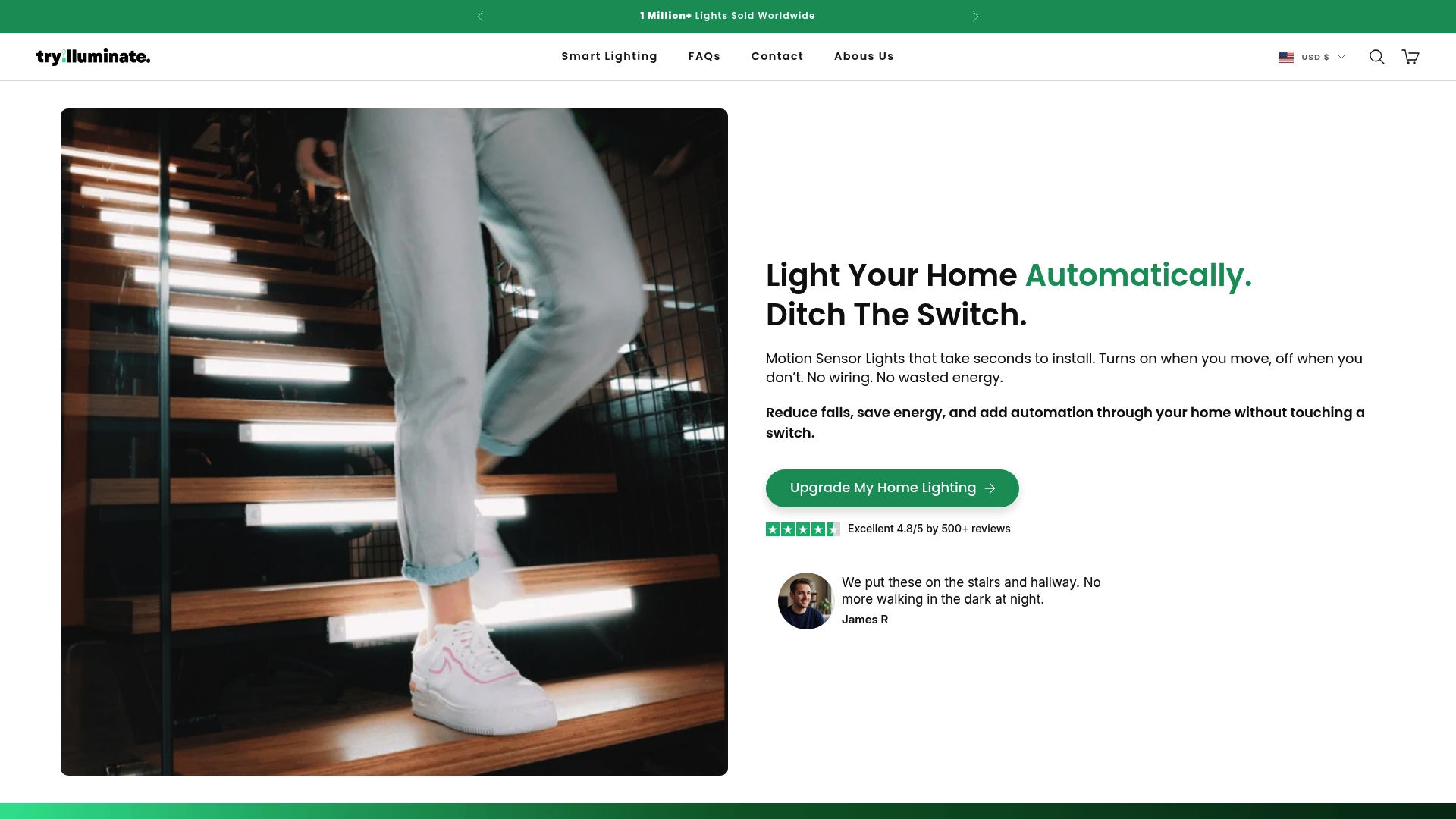
Explore our best sellers and discover how effortless it is to enhance your living spaces with quick, tool-free installations. Don’t wait to enjoy the lifestyle benefits of smart lighting including safety enhancements and monthly cost savings. Visit tryilluminate.co now and start your transformation with lighting solutions made for modern living.
Smart lighting refers to technologically advanced systems that integrate wireless sensors and mobile device connectivity to provide adaptive, responsive home illumination. These systems can adjust brightness, color temperature, and activate based on motion, among other features.
Smart lighting technologies offer energy-saving features such as automatic dimming, motion activation, and precise brightness adjustments based on ambient conditions, potentially reducing electricity costs by up to 30% compared to traditional lighting.
Smart lighting enhances safety through features like motion-activated illumination in vulnerable areas, simulated occupancy patterns when homeowners are away, and real-time alerts for unexpected movements, creating a more secure home environment.
Smart lights come in various forms, including bulb-based systems, light strips, plug-in modules, hardwired fixtures, and motion-activated lights, each serving specific purposes from accent lighting to security enhancement.

7 Key Smart Lighting Benefits Homeowners Should Know
Discover 7 essential smart lighting benefits for homeowners. Learn how these solutions improve safety, save energy, and enhance your home’s ambiance.
Read more
Top 6 Best Wireless Lights for Homeowners in 2026
Discover the top 6 best wireless lights for homeowners to enhance your space with energy-efficient, easy-to-install lighting solutions.
Read more