

Juggling work, family, and energy bills keeps modern homeowners searching for smart ways to simplify life and protect what matters most. With the rise of impressive technologies like motion sensors and remote control systems, upgrading to DIY smart lighting offers immediate comfort, safety, and real energy savings—without calling in a professional. Discover how easy-to-install solutions blend with daily routines, making it easier than ever to control, personalize, and optimize every corner of your home for both style and sustainability.
| Point | Details |
|---|---|
| DIY Smart Lighting Enhances Control | Homeowners can customize and manage their lighting remotely, implementing energy-saving features and improving security. |
| Integration with IoT Technology | Smart lighting systems utilize Internet of Things principles for seamless connectivity to smartphones and voice assistants. |
| Diverse Solutions Available | Various types of smart lighting solutions accommodate different needs, from wireless LED strips to smart bulbs and plug-and-play outlets. |
| Financial Benefits and Considerations | While initial costs may be higher, smart lighting can lead to significant energy savings and long-term cost efficiency. |
DIY Smart Lighting transforms traditional home illumination by empowering homeowners to customize, control, and optimize their lighting environments without complex professional installation. These innovative systems leverage wireless technologies, motion sensors, and user-friendly interfaces to create intelligent, adaptable lighting solutions that enhance both functionality and ambiance.
At its core, DIY smart lighting represents a technological revolution in home automation. Smart lighting systems dynamically control light output using integrated sensors and user inputs, allowing unprecedented customization. These systems go far beyond traditional on/off switches, enabling homeowners to:
The technological backbone of DIY smart lighting involves Internet of Things (IoT) principles, which connect lighting fixtures to smartphones, voice assistants, and centralized control platforms. This connectivity allows real-time adjustments, scheduling, and environmental responsiveness that traditional lighting systems cannot achieve.
Pro tip: Start your DIY smart lighting journey by selecting wireless, battery-powered fixtures that require minimal technical expertise for installation and configuration.
Modern smart lighting systems represent a sophisticated technological evolution that goes far beyond traditional illumination. Advanced lighting technologies integrate multiple intelligent features designed to enhance user experience, energy efficiency, and home automation capabilities.
These cutting-edge systems incorporate several key technological innovations that transform how homeowners interact with their lighting environments:
The technological core of modern smart lighting relies on Internet of Things (IoT) principles, enabling seamless communication between devices. Wireless communication networks and AI techniques allow for unprecedented levels of customization, allowing homeowners to create dynamic lighting scenarios that respond to environmental conditions, personal preferences, and time of day.
By leveraging edge computing and intelligent sensor fusion, these systems can predict and adapt to user needs, creating lighting environments that are not just functional, but truly responsive and personalized. This represents a significant leap from traditional static lighting solutions, offering unprecedented control and efficiency.
Pro tip: Select smart lighting systems with open protocol compatibility to ensure future upgradability and cross-device integration.
DIY smart lighting solutions come in a diverse range of configurations, offering homeowners unprecedented flexibility in transforming their living spaces. Easy home automation solutions can be categorized into several distinct types that cater to different needs, preferences, and technical skill levels.
The primary categories of DIY smart lighting solutions include:
Wireless LED Strip Lights
Motion Sensor Lighting
Smart Bulb Systems
Plug-and-Play Smart Outlets
Each type of DIY smart lighting solution offers unique advantages, allowing homeowners to customize their approach based on specific requirements. The modular nature of these systems means users can start small and gradually expand their smart lighting network without extensive technical knowledge or professional installation.
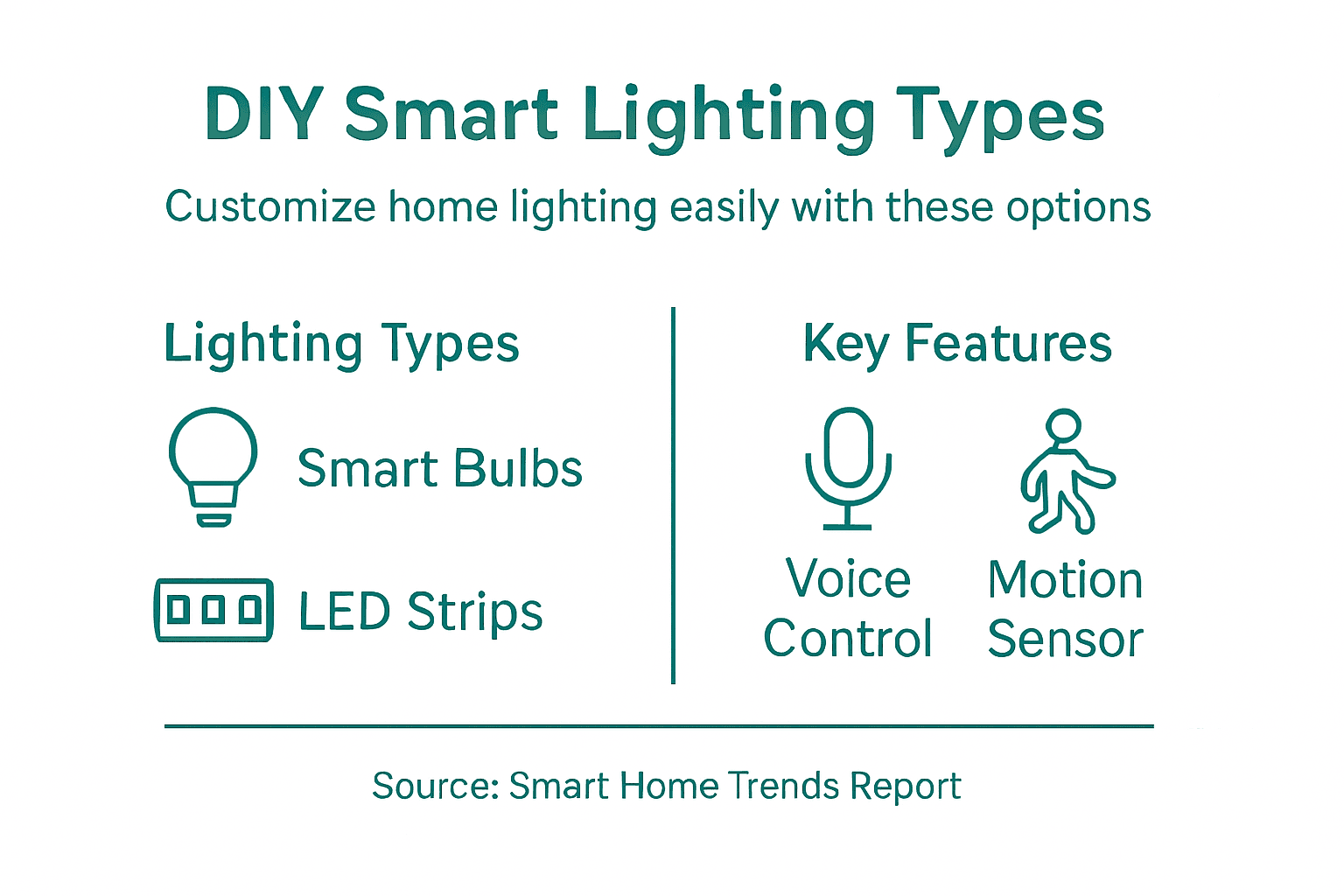
Here’s a comparison of popular DIY smart lighting types and their ideal uses:
| Lighting Solution | Best Location | Standout Benefit |
|---|---|---|
| Wireless LED Strip | Living room, bedrooms | Flexible color ambiance |
| Motion Sensor Lighting | Entryways, stairs | Instant hands-free lighting |
| Smart Bulb Systems | Any room | Full brightness control |
| Plug-and-Play Outlets | Lamps, home offices | Retrofit existing fixtures |
Pro tip: Begin with one room and select a versatile smart lighting solution that offers compatibility with multiple device ecosystems.
Home safety has entered a new era with DIY smart lighting technologies that provide comprehensive protection beyond traditional illumination. IoT-enabled lighting systems improve environmental responsiveness by creating intelligent, adaptive environments that significantly enhance residential security.
Smart lighting contributes to home safety through multiple strategic approaches:
Motion Detection Capabilities
Remote Monitoring Features
Intelligent Simulation Techniques
The strategic implementation of smart lighting for residential safety transforms traditional security approaches. By integrating sensors, automated controls, and intelligent scheduling, these systems provide nuanced protection that adapts to changing environmental conditions.

Modern DIY smart lighting goes beyond simple illumination, functioning as an active security ecosystem that monitors, responds, and protects residential spaces with unprecedented sophistication.
Pro tip: Position motion sensor lights strategically near entry points and dark corners to maximize home safety coverage.
DIY smart lighting technologies offer significant financial and energy benefits, but homeowners must navigate potential challenges strategically. Smart lighting systems can generate energy savings ranging from 2% to 93%, depending on implementation and user behavior.
Key financial and energy considerations include:
Initial Investment Costs
Energy Efficiency Metrics
Common Implementation Challenges
Rechargeable lighting solutions can further enhance cost-effectiveness by reducing battery replacement expenses and providing flexible installation options. Successful implementation requires careful planning, understanding individual home requirements, and selecting systems that align with specific energy-saving goals.
By addressing potential pitfalls proactively, homeowners can maximize the financial and environmental benefits of DIY smart lighting technologies.
Review these common pitfalls and practical ways to overcome them for optimal smart lighting performance:
| Pitfall | Solution |
|---|---|
| Device compatibility | Verify system support before purchase |
| Signal interference | Use mesh networks for reliable coverage |
| Learning curve | Start with basic setup and expand gradually |
| Firmware updates | Enable automatic updates for security |
Pro tip: Calculate potential energy savings by comparing your current lighting electricity consumption with projected smart lighting system efficiency before making an investment.
Transforming your home with smart lighting starts by addressing common challenges like complicated installations, energy waste, and limited control over traditional lighting. If you want to boost safety, customize ambiance, and save on energy bills without the hassle of wiring or expert help, our offerings at Smart Motion Sensor Lights Collection are designed just for you. These wireless, rechargeable lights deliver motion-activated convenience and enhance security at key spots such as hallways, stairs, and entryways.
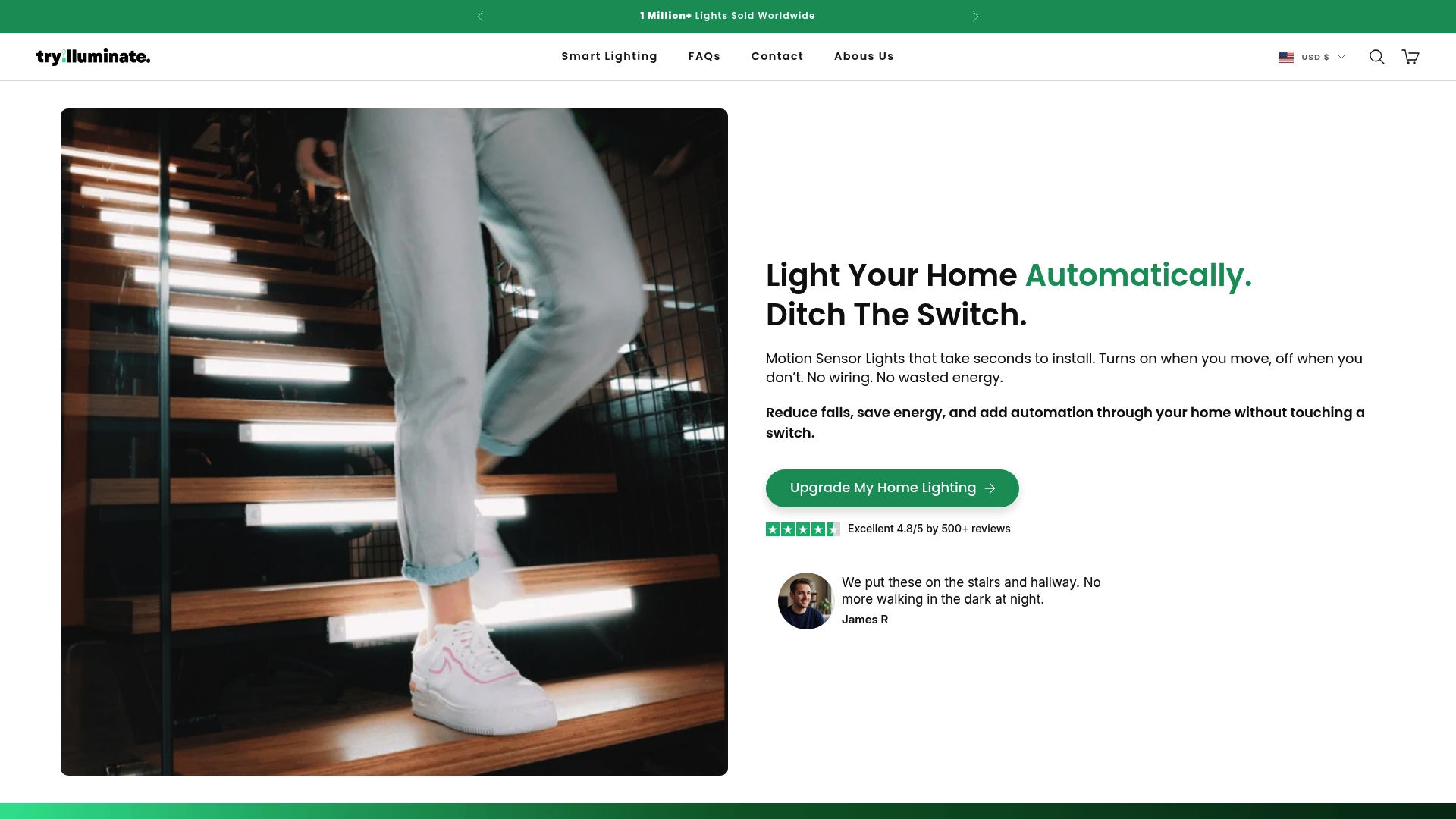
Take control of your home’s lighting today by choosing from our selection of hassle-free, smart lighting products. Explore innovative options that fit your lifestyle and start experiencing personalized illumination immediately. Visit TryIlluminate now and discover why our Best Sellers are trusted by homeowners looking to upgrade with effortless smart lighting technology.
DIY smart lighting refers to home lighting systems that allow homeowners to customize and control their lighting without needing professional installation. These systems use wireless technologies and sensors to create adaptable lighting environments.
DIY smart lighting enhances home safety through features such as motion detection, remote monitoring, and occupancy simulation. These features can deter potential intruders and provide real-time alerts to homeowners.
The primary types of DIY smart lighting solutions include wireless LED strip lights, motion sensor lighting, smart bulb systems, and plug-and-play smart outlets, each offering unique functionalities tailored to various needs.
Common challenges include compatibility issues with existing infrastructure, a learning curve for system configuration, signal interference, and the need for regular firmware updates. Addressing these can help maximize the benefits of smart lighting.

7 Essential Wireless Lighting Solutions List for Homes
Discover 7 smart tips with this wireless lighting solutions list for homes. Learn how DIY upgrades can boost safety, ambiance, and energy savings fast.
Read more
Why Upgrade Home Lighting: Safety, Savings, Comfort
Upgrade home lighting for better safety, energy savings, and seamless automation. Explore smart fixtures, wireless controls, and ambiance benefits worldwide.
Read more