


Finding the perfect balance of light and comfort in a modern city home feels like a constant challenge. Urban homeowners know that static lights drain energy and disrupt routines, while smarter systems offer efficient, adaptive solutions. With smart lighting using sensor feedback and user inputs for automatic adjustment, you can boost safety, save energy, and transform ambiance without complex installations. This guide shows how simple DIY smart lighting makes daily life smoother, safer, and truly personalized.
| Point | Details |
|---|---|
| Smart Lighting Enhances Efficiency | Automated systems significantly reduce energy consumption by adapting lighting based on occupancy and natural light, providing average yearly savings of $120 to $240. |
| User Control and Customization | Homeowners can easily manage smart lighting via mobile apps, permitting adjustments to brightness, color temperature, and scheduling to suit specific routines. |
| Safety Improvements | Motion sensor lights enhance safety in high-traffic areas by providing automatic illumination, minimizing the risk of accidents in dimly lit spaces. |
| Cost-Effective Solutions | Initial investments in smart lighting systems can pay for themselves within 1 to 5 years through reduced energy bills and decreased maintenance costs. |
Smart lighting goes beyond traditional switches and bulbs. At its core, smart lighting uses feedback from sensors and user inputs to automatically adjust light output based on your needs, preferences, and environment. Think of it as lighting that learns. When you walk into a hallway at night, motion sensors detect movement and gradually brighten the lights. When morning sunlight streams through your living room windows, daylight detection automatically reduces overhead brightness. This responsive approach means you’re not stuck with static lighting that never adapts.
What makes smart lighting truly different from conventional systems is the integration of connectivity and automation. Rather than manually flipping switches room by room, your lights communicate with a central system that coordinates everything. This integration enables smart home lighting systems combining traditional automation with IoT technology to create environments that respond intelligently to your daily routines. Your bedroom lights can gradually warm up before your alarm goes off, kitchen lighting adjusts to task-specific brightness levels while you cook, and outdoor lights activate only when motion is detected after sunset. For urban homeowners managing multiple living spaces or small apartments where efficiency matters, this level of coordination eliminates wasted energy and constant manual adjustments.
The practical appeal for DIY enthusiasts is significant. Modern smart lighting doesn’t require hiring an electrician or rewiring your home. Wireless, rechargeable systems with daylight detection and adjustable tones can be installed in minutes without tools, transforming hallways, stairs, closets, and kitchens with minimal effort. You control everything through a smartphone app or voice commands, making adjustments on the fly. Whether you’re brightening a dimly lit staircase for safety or creating warmer ambient lighting in your living room, the flexibility puts control directly in your hands. The systems work independently or together, scaling up as your comfort level grows and your needs evolve.
Pro tip: Start with motion sensor lights in high-traffic areas like hallways and staircases, where energy savings and safety gains are most immediately noticeable and create natural momentum for expanding to other rooms.
Automated home lighting systems come in several distinct types, each designed to solve different problems in your home. The main categories include motion sensor systems, scheduled lighting, daylight responsive systems, and AI-powered adaptive lighting. Understanding which type fits your space helps you choose the right solution for your specific needs. Motion sensor lights are the most practical entry point for most homeowners. These detect movement and automatically turn lights on or off, making them ideal for hallways, staircases, closets, and entryways where you might have your hands full or need light immediately. Scheduled lighting systems work on timers, turning lights on and off at preset times, which works well for security when you’re away or for consistent bedroom lighting routines. Daylight responsive systems adjust brightness based on natural light, reducing energy waste in rooms with windows by only boosting artificial light when needed.
At a more advanced level, smart lighting systems integrate LED technology with edge computing to create truly responsive environments. Sensor-based systems use multiple inputs from motion detectors, light sensors, and sometimes temperature monitors to coordinate lighting across your home intelligently. These systems analyze occupancy patterns and adjust illumination accordingly, learning your preferences over time. Decentralized systems give you independent control over individual light fixtures or zones, meaning you can customize brightness and color temperature room by room without affecting the entire home. For tech-forward homeowners, AI-powered lighting systems represent the cutting edge, using deep learning algorithms to predict your needs and automatically adjust lighting based on time of day, room usage patterns, and even your personal preferences. Your living room lights warm up gradually in the evening as your system recognizes you typically spend time there after work.
For most urban homeowners starting with home automation, the practical sweet spot lies with motion sensor lights combined with daylight detection. This combination delivers immediate benefits without overwhelming complexity. You get safety improvements in dark areas, substantial energy savings from LED efficiency plus automatic shutoff, and ambient control through adjustable color tones. Wireless, rechargeable systems skip the installation headaches entirely, installing in minutes without tools or electrical work. As your comfort grows and you want more control, you can expand to scheduled lighting for specific routines or add sensor networks across multiple rooms. The beauty of modern systems is that you don’t need to commit to one approach. You can start small, prove the value in your home, and gradually add more sophisticated automation as your needs evolve.
Pro tip: Begin with motion sensor lights in your highest-traffic problem areas like staircases or hallways, where you’ll immediately notice safety and convenience gains, then expand to other zones once you understand how your household actually moves through the home.
Here’s a summary comparing key types of automated home lighting systems and the problems they solve:
| System Type | Main Advantage | Best Placement | Notable Limitation |
|---|---|---|---|
| Motion Sensor Lighting | Turns on when movement detected | Hallways, entryways | Can trigger unintentionally |
| Scheduled Lighting | Follows preset on/off times | Bedrooms, outdoor lights | Inflexible for changing needs |
| Daylight Responsive | Adjusts to natural sunlight | Living rooms, kitchens | Less effective at night |
| AI-Powered Adaptive | Learns user habits automatically | Living and common spaces | Higher cost, complex setup |
The core appeal of modern smart lighting lies in three interconnected features that work together to transform how your home functions. Wireless connectivity eliminates the need for complicated electrical rewiring. Instead of running new circuits through walls or hiring electricians, wireless systems communicate via WiFi or low-energy protocols, letting you install lights anywhere without tools or expertise. This matters enormously for renters or homeowners who want flexibility. You can add motion sensor lights to a dark staircase, install LED strips under kitchen cabinets, or brighten a dim hallway without touching your electrical panel. The second feature, sensor technology, does the actual thinking. Motion sensors detect when you enter a room and trigger lights automatically. Daylight sensors measure incoming natural light and adjust artificial brightness accordingly, preventing your lights from blazing at full strength when sunshine already illuminates the space. Temperature sensors in some systems can even trigger warmer color temperatures during winter months or cooler tones in summer. These sensors work together continuously, creating environments that respond to real conditions rather than static settings.
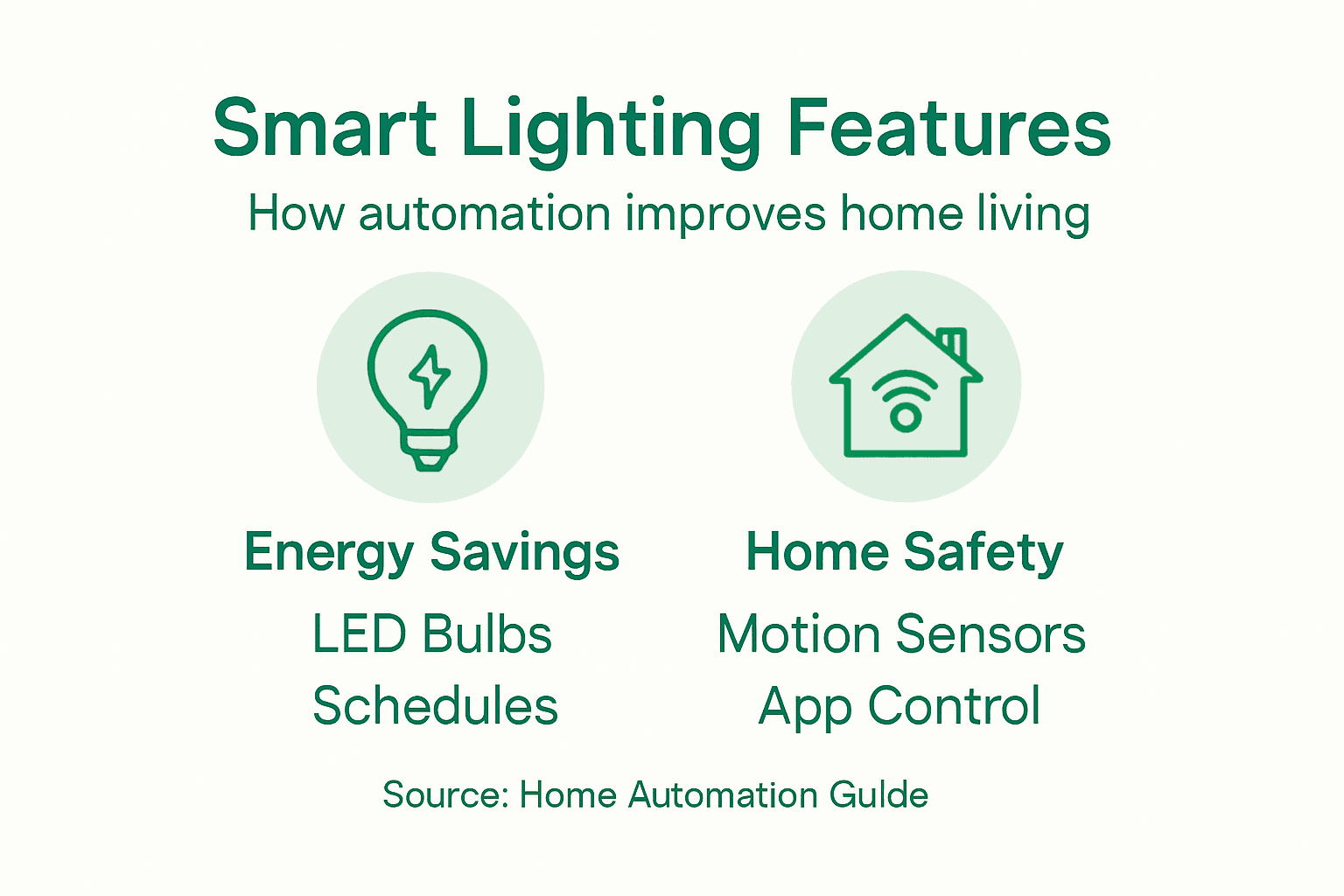
The third essential feature is app control, which puts the entire system in your pocket. Wireless smart lighting systems enable remote control through mobile applications that let you manage lighting from your phone, whether you’re sitting on your couch or checking on your home while traveling. This goes beyond simple on-off switches. Most apps let you adjust brightness levels, change color temperature from warm to cool, set schedules for specific times, and even create scenes like “Movie Night” that dims everything to your preferred level with one tap. You can manually override automatic settings whenever you want, giving you flexibility when the system’s predictions don’t match your actual needs. Advanced systems show you real-time energy consumption, helping you identify which rooms use the most power and where you can save more.
What makes these three features powerful is how they work together to solve actual problems. Wireless communication protocols enable remote monitoring combined with sensor-driven adaptation that automatically adjusts to occupancy and ambient light while letting you intervene whenever needed. Install wireless motion sensors in hallways and they reduce energy waste by turning lights off when spaces are empty. Your app shows you which lights are on right now, and you can shut down any you forgot about. Set daylight detection in your bedroom, and you stop wasting energy during morning hours when natural light suffices. Schedule your front porch lights to activate at sunset for security, then adjust the schedule through your app when daylight saving time shifts. For urban homeowners managing small apartments or multi-room spaces, this combination prevents the frustration of manual switching while keeping you in control. You’re not locked into rigid automation. The sensors handle routine adjustments while your app lets you customize based on your real lifestyle, not assumptions about how you live.
Pro tip: Start by testing your system in one room for a week before expanding, using the app to log which automatic adjustments work well and which ones you override regularly, then use those patterns to fine-tune settings across your entire home.
The financial case for smart lighting becomes clear when you look at actual energy consumption patterns. Traditional fixed lighting wastes tremendous amounts of electricity. A hallway light stays on at full brightness whether someone is walking through or the space sits empty. Your kitchen lights run at the same level during daylight hours when natural light floods the windows as they do on dark evenings. Bedroom lights stay on full brightness even after you fall asleep. Smart lighting eliminates these inefficiencies through continuous optimization. Motion sensors turn off lights within minutes of a room becoming empty, preventing the hours of wasted illumination that happen with manual switches. Daylight responsive systems reduce artificial lighting whenever natural light suffices. These small adjustments add up dramatically across your entire home. Research shows that data-driven smart home automation can reduce energy consumption by 15-25% through adaptive control strategies, with machine learning algorithms continuously optimizing device usage based on occupancy patterns and environmental conditions.
The savings become concrete on your monthly electricity bill. A typical urban household might spend $50 to $100 monthly on lighting alone. A 20 percent reduction saves you $10 to $20 every single month. Over a year, that reaches $120 to $240. Over five years, that climbs to $600 to $1,200 in recovered costs. Combined with LED bulbs that use 75 percent less energy than incandescent bulbs while lasting 25 times longer, your actual savings often exceed these estimates. The payback timeline shrinks further when you factor in the elimination of bulb replacements. Traditional bulbs die every year or two, forcing you to climb ladders, buy replacements, and spend time on maintenance. LED systems used in modern smart lighting last a decade or more, eliminating that entire cost category. Beyond pure dollars saved, smart lighting control systems utilizing daylight harvesting achieve significant energy savings while meeting user lighting needs, demonstrating environmental benefits through reduced electricity consumption that decreases your carbon footprint proportionally. When you multiply your household reduction across millions of homes, the collective environmental impact becomes substantial.
What surprises many homeowners is how quickly the system pays for itself. A basic motion sensor light system for hallways, staircases, and entry points costs between $50 to $150 per fixture installed. Factor in four to six fixtures in a typical urban apartment or townhouse, and your total investment lands around $300 to $900. Your monthly savings of $15 to $25 mean you recover that investment in 12 to 60 months, depending on your starting electricity costs and how much of your home you automate. After that payback period, every additional month brings pure savings. Wireless, rechargeable systems eliminate installation labor costs entirely, since you install them yourself in minutes without hiring professionals. Add the intangible benefits of improved safety from always-available lighting in dark stairways, better sleep quality from appropriate bedroom lighting that adjusts naturally, and convenient app control that removes friction from your daily routine. The financial calculation becomes persuasive even before considering the environmental angle. Your electricity company notices the change too. Some utilities offer rebates for smart lighting installations, recognizing that every watt you save reduces strain on their grid during peak demand periods.
Pro tip: Track your electricity usage before installation, then compare your bill three months after adding smart lights, noting the exact kilowatt-hour reduction to see your actual savings rather than relying on estimates.
Below is a table summarizing the financial impact and cost efficiency of smart lighting versus traditional setups:
| Lighting Type | Typical Setup Cost | Average Yearly Savings | Payback Period |
|---|---|---|---|
| Traditional | Low, $0–$50 | None | No direct payback |
| Smart Motion Sensor | $300–$900 | $120–$240 | 1–5 years |
| LED Bulbs Only | $100–$300 | $80–$150 | 1–3 years |
| Full Smart System | $600–$1,500 | $180–$300 | 2–6 years |
Safety transforms dramatically when your home responds intelligently to darkness and movement. Picture coming home late at night to a completely dark apartment. Traditional lighting requires you to fumble for switches in the darkness, navigating stairs or hallways where a single misstep could cause a serious fall. Smart motion sensor lights eliminate this vulnerability. The moment you open your front door, hallway lights activate automatically, illuminating your path before your feet touch the first step. You never encounter unexpected darkness. For families with children or elderly parents, this automatic illumination prevents the falls and injuries that happen in dimly lit stairwells. The safety benefits extend beyond preventing accidents. IoT-enabled smart lighting solutions enhance safety by deterring intruders and ensuring adequate illumination through occupancy sensing and automated scheduling, creating the appearance of occupancy even when your home is empty. When you travel, your system activates lights on rotating schedules, making it appear someone is home rather than broadcasting that your house sits vacant. Outdoor motion sensor lights activate immediately when someone approaches your entry, either welcoming you home or deterring potential trespassers who avoid well-lit areas. The psychological advantage of visibility works powerfully. Criminals overwhelmingly target dark, poorly lit properties. A well-lit home becomes an unattractive target.
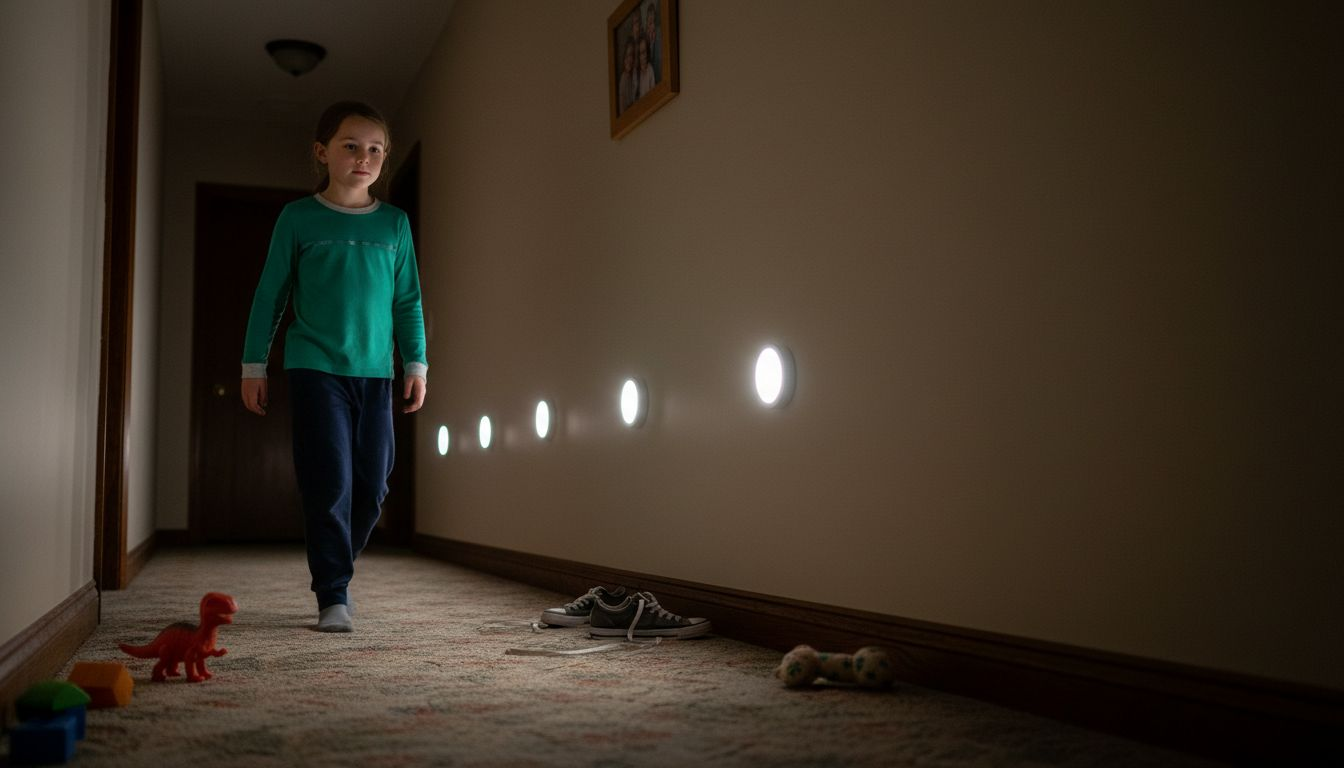
Beyond security, smart lighting transforms your daily comfort and quality of life in ways you notice immediately. Your morning routine becomes more pleasant when bedroom lights gradually brighten as your alarm approaches, gently waking you instead of harsh instant brightness jolting you awake. Your circadian rhythm aligns better with natural light patterns because your system can simulate sunrise gradually. Evening routines improve when living room lights warm to softer tones an hour before bedtime, signaling your body to prepare for sleep rather than keeping you stimulated with bright white light. Kitchen task lighting automatically boosts to full brightness when you step into cooking zones, preventing accidents from inadequate lighting while chopping vegetables or reading recipe details. The same lights dim to ambient levels when you leave the kitchen for other activities. Your body experiences less stress when lighting adapts naturally to your activities rather than forcing you to manually adjust switches constantly.
The lifestyle convenience speaks for itself. No more searching for light switches in unfamiliar darkness when guests arrive. No more stumbling through hallways at night to use the bathroom because motion activation provides instant illumination. No more leaving lights on accidentally because your app shows every active light and lets you turn off forgotten fixtures from bed. No more climbing ladders to change bulbs in hard-to-reach fixtures because LED systems last a decade. The cumulative effect of these small conveniences adds up to meaningful quality-of-life improvement. Your time and mental energy shift from managing manual lighting to enjoying your space. Families with young children experience particular benefits. Parents can light hallways and bathrooms with motion sensors rather than relying on children to find switches safely. Nighttime bathroom trips become safer and less disruptive. Late-night snack runs to the kitchen trigger automatic lighting without waking sleeping family members with overhead brilliance. Smart lighting adapts to your life rather than forcing your life to adapt to static lighting systems.
Pro tip: Install motion sensors on staircases, hallway entries, and bathroom paths first, where safety gains are most dramatic, then observe your household’s movement patterns for two weeks before adding ambient or task lighting to other rooms.
Are you ready to transform your living space with smart lighting that enhances safety, saves energy, and creates the perfect ambiance? The article highlights common challenges like wasted electricity, dark hallways, and outdated fixed lighting. At Try Illuminate, we solve these with easy-to-install, wireless, and rechargeable solutions that adapt to your lifestyle. Start with our Smart Motion Sensor Lights Collection to bring instant safety and convenience to hallways, staircases, and entryways.
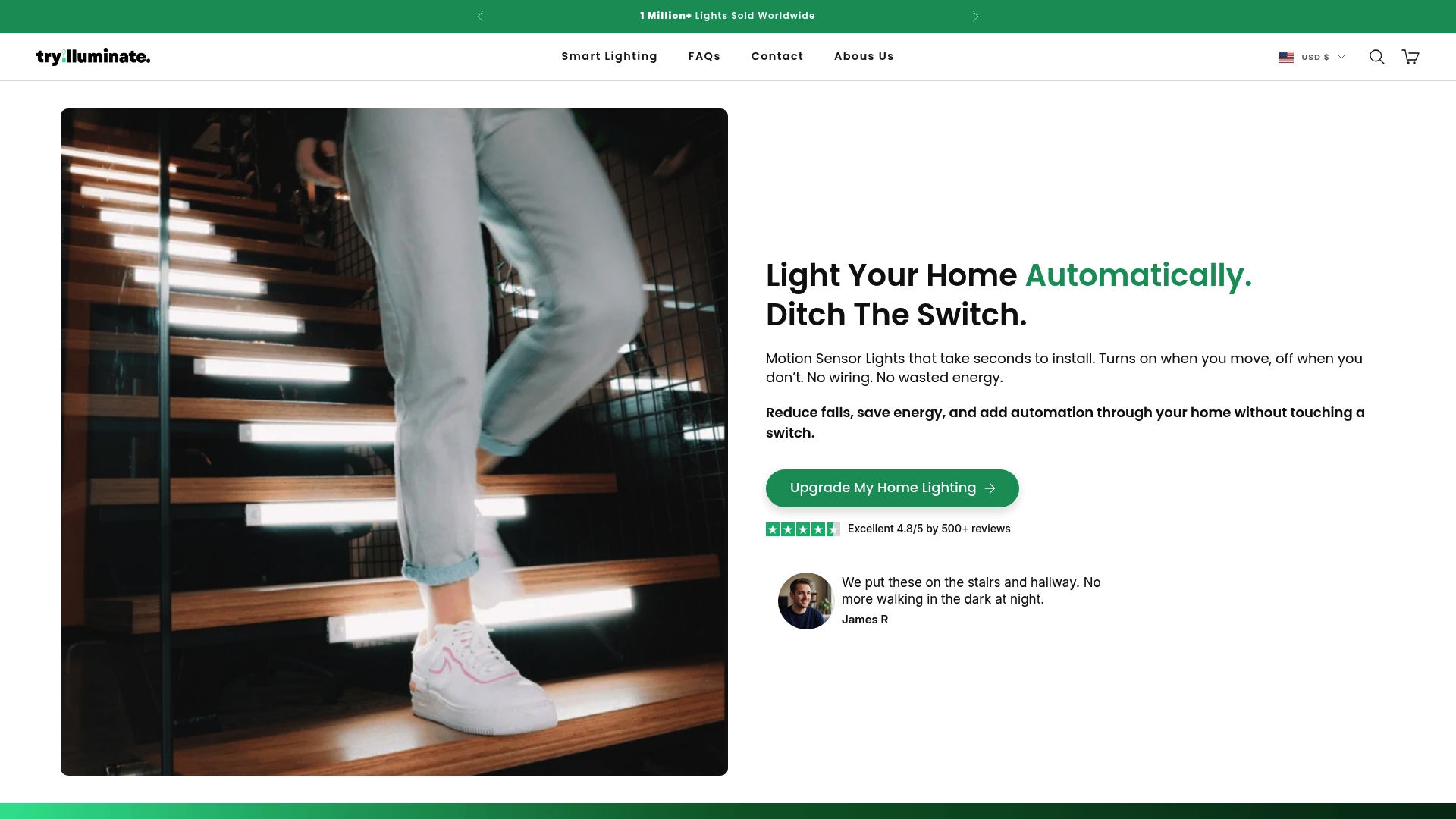
Discover how smart lighting can dramatically reduce energy costs while improving your daily comfort. With app control, daylight detection, and adjustable tones, you stay in full control. Browse our Best Sellers to find popular smart lighting features customers love. Take the first step with https://tryilluminate.co and enjoy hassle-free home automation that pays off now and in the future.
Smart lighting offers numerous benefits, including enhanced energy efficiency, improved safety through automatic illumination, and the ability to create customized ambiance based on personal preferences and activities.
Motion sensor lighting enhances safety by automatically illuminating spaces when movement is detected, reducing the risk of accidents in dark areas such as hallways and staircases, and providing light when you need it without fumbling for switches.
There are several types of smart lighting systems, including motion sensor lights, scheduled lighting, daylight-responsive systems, and AI-powered adaptive lighting that learns your habits for optimized lighting conditions.
You can reduce energy costs with smart lighting by utilizing motion sensors to turn off lights when rooms are unoccupied, employing daylight-responsive systems to adjust artificial light based on natural light levels, and choosing LED bulbs that consume significantly less energy than traditional bulbs.

Motion Sensors for Security: Home Safety and Savings
Motion sensors for security boost home safety, cut energy costs, and offer easy DIY installation. Learn about types, features, and usage tips.
Read more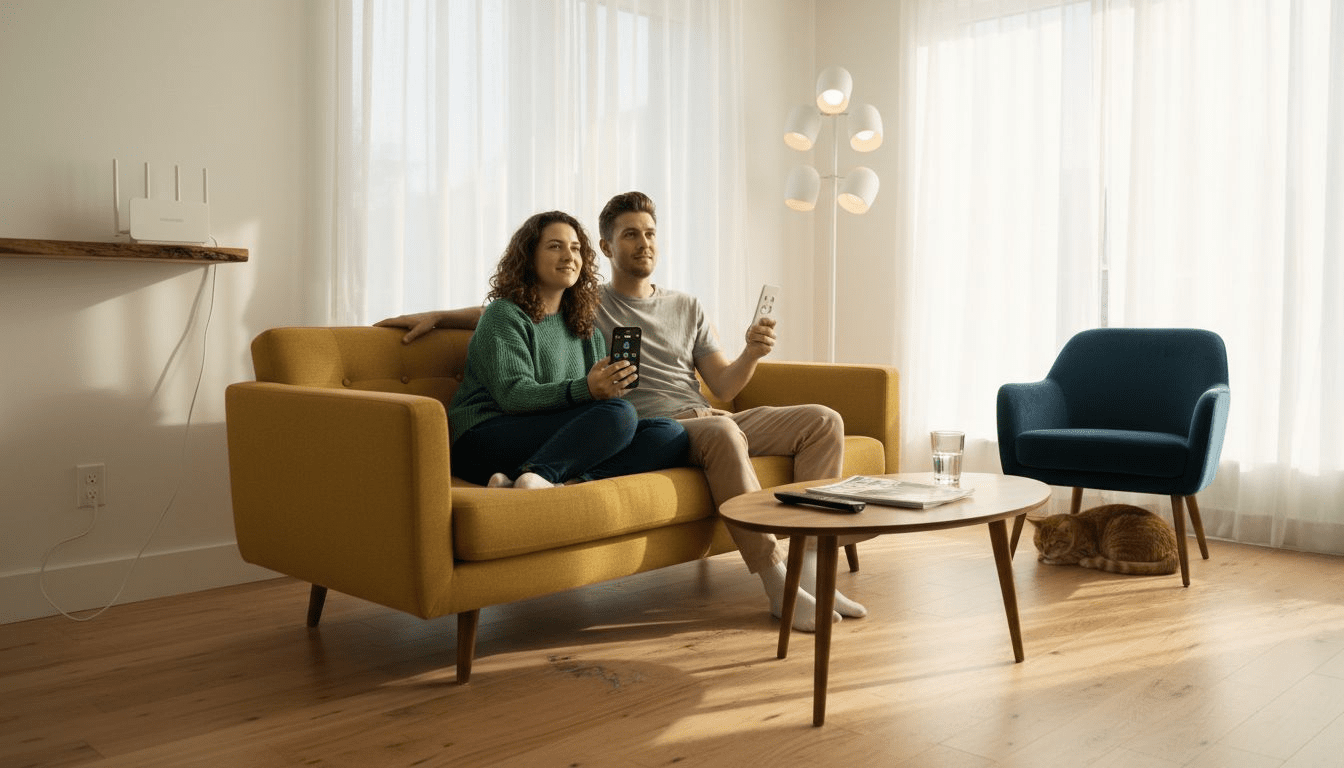
Why Choose Wireless Lighting for Modern Homes
Wireless lighting lets homeowners upgrade convenience, safety, and energy efficiency. Explore how wireless lights work, types, costs, and key benefits.
Read more