


Replacing traditional switches can seem daunting, but wireless lighting brings a fresh approach that adapts to modern home needs. Flexible control protocols such as Wi-Fi, Bluetooth Low Energy, and Zigbee are now the backbone of smart lighting, creating dynamic networks without complex wiring. Mesh networking and secure protocols dispel myths about reliability and safety, making these systems popular among Canadian, American, and European homeowners. Discover how easy-to-install wireless lighting technology transforms your space while improving both comfort and energy efficiency.
| Point | Details |
|---|---|
| Wireless Lighting Offers Flexibility | Utilizes radio frequency protocols for easy control and installation without invasive wiring. |
| Advanced Features Enhance Safety and Efficiency | Systems include energy-efficient scheduling and programmable lighting for optimal user experience. |
| Cost-Effectiveness Compared to Wired Systems | Lower installation and maintenance costs lead to significant long-term energy savings. |
| Strategic Planning is Crucial | Successful implementation requires compatibility checks and thorough pre-installation assessments to avoid common pitfalls. |
Wireless lighting represents a sophisticated technological approach that transforms traditional home illumination systems. These advanced systems use radio frequency protocols like Wi-Fi, Bluetooth Low Energy, and Zigbee to enable flexible, intelligent lighting control without complex hardwiring. Unlike conventional setups, wireless lighting protocols create dynamic networks that adapt seamlessly to homeowners’ changing needs.
Modern wireless lighting technologies dispel several persistent myths about home automation. Contrary to outdated assumptions, these systems are not unreliable or insecure. In fact, contemporary wireless lighting offers robust features that enhance both functionality and safety:
The core technology behind wireless lighting involves sophisticated microcontrollers and wireless communication modules. Smartphone-controlled lighting systems now replace traditional physical switches, providing homeowners unprecedented convenience. These systems communicate through encrypted channels, ensuring data privacy and preventing unauthorized access.
Wireless Lighting Characteristics:
Pro tip: Before purchasing a wireless lighting system, verify compatibility with your existing smart home infrastructure to ensure smooth integration and maximum functionality.
Wireless lighting solutions represent a sophisticated spectrum of technologies designed to transform home illumination. Distributed wireless sensor networks leverage advanced communication protocols like ZigBee, Wi-Fi, and Bluetooth to create intelligent lighting ecosystems that adapt dynamically to homeowners’ needs.
The primary types of wireless lighting solutions include:
Each network topology offers unique advantages for home lighting management. ZigBee protocol configurations provide different performance characteristics, including:
Here’s a summary comparing network topologies for wireless lighting solutions:
| Network Topology | Control Structure | Scalability | Typical Use Case |
|---|---|---|---|
| Star | Central hub manages nodes | Limited | Small homes or simple setups |
| Mesh | Devices relay data flexibly | High | Larger spaces, device-rich |
| Tree | Hierarchical, layered links | Moderate | Complex, multi-zone homes |
Wireless lighting solutions typically integrate multiple smart components to create comprehensive illumination systems. These advanced setups can include occupancy sensors, ambient light detectors, smartphone controls, and programmable scheduling capabilities that transform traditional lighting into intelligent, responsive networks.
Key Wireless Lighting Components:
Pro tip: When selecting a wireless lighting system, prioritize solutions with multiple communication protocol support to ensure maximum compatibility and future-proofing.
Wireless lighting systems function through a sophisticated network of sensors, controllers, and communication protocols that transform traditional home illumination into intelligent, responsive environments. These advanced technologies leverage radio frequency signals like ZigBee and Wi-Fi to create seamless, adaptable lighting experiences.
The core operational mechanism of wireless lighting involves several key technological components:
Signal Transmission Mechanisms:
Wireless lighting technology integrates microcontrollers with Wi-Fi communication to create a comprehensive automation system. The technology enables precise control through multiple channels, including smartphone applications, motion sensors, and programmed schedules. These systems can dynamically adjust light intensity, color temperature, and operational patterns based on real-time environmental conditions.
Advanced wireless lighting solutions incorporate sophisticated fault detection mechanisms, utilizing current sensors and light-dependent resistors to maintain consistent performance and reliability. This ensures that lighting systems can self-monitor, automatically adjust, and provide uninterrupted illumination across various home environments.
Pro tip: When implementing wireless lighting, consider purchasing systems with multi-protocol support to maximize compatibility and future technological adaptability.
Smart wireless lighting systems revolutionize home environments by delivering unprecedented levels of convenience, safety, and energy efficiency. These advanced technologies transform traditional lighting from a simple illumination source into an intelligent, adaptive network that responds dynamically to homeowners’ needs and preferences.
The key benefits of wireless lighting encompass multiple critical aspects:
Wireless lighting sensors contribute significantly to energy savings by operating lights based on precise occupancy detection and ambient light levels. These intelligent systems can automatically adjust brightness, turn lights on or off, and create customized lighting scenarios that enhance both comfort and operational efficiency.
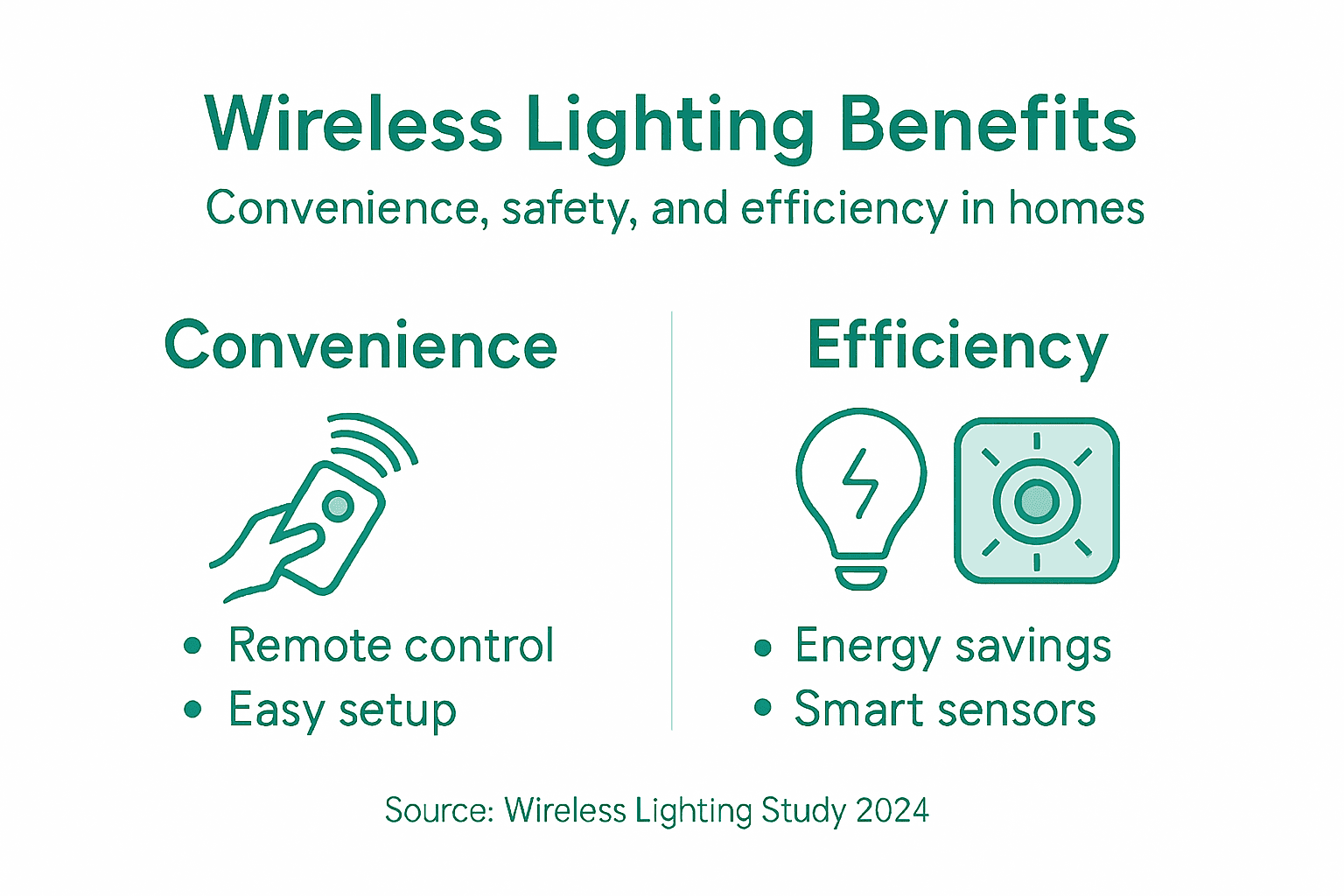
The technological ecosystem of wireless lighting goes beyond simple illumination. By integrating advanced sensors, microcontrollers, and communication protocols, these systems create personalized environments that support well-being, reduce energy waste, and provide unparalleled user control. Homeowners can now design lighting experiences that adapt in real-time, promoting both sustainability and enhanced living experiences.
Wireless Lighting Performance Advantages:
Pro tip: When selecting a wireless lighting system, prioritize solutions offering multi-protocol compatibility and comprehensive sensor integration to maximize long-term flexibility and performance.
Wireless smart lighting systems offer a compelling financial alternative to traditional wired lighting, presenting significant cost advantages across installation, maintenance, and operational expenses. These innovative solutions dramatically transform the economic landscape of home illumination technologies.
Key cost comparison aspects between wireless and wired lighting include:
Wireless lighting controls reduce installation time by up to 70%, providing remarkable flexibility for homeowners seeking efficient lighting solutions. While traditional wired systems offer high reliability in mission-critical environments, wireless technologies excel in retrofit projects and smart home integration.
The economic benefits extend beyond initial setup. Wireless lighting systems can generate substantial long-term savings through:
Comparative Cost Factors:
To help visualize cost and efficiency, here is a direct comparison between wireless and wired lighting systems:
| Aspect | Wireless Lighting | Wired Lighting |
|---|---|---|
| Initial Installation | Minimal structural work | Extensive electrical labor |
| Upgrade Flexibility | Easily scalable and adaptive | Difficult, costly upgrades |
| Maintenance Effort | Centralized, simplified | Specialized, location-based |
| Energy Savings | Up to 60% reduction | Limited by fixed technology |
Pro tip: Calculate potential savings by comparing your current lighting system’s energy consumption with wireless alternatives, considering both upfront and long-term operational costs.
Networked lighting control systems require strategic planning to prevent costly implementation mistakes. Homeowners embarking on wireless lighting upgrades must navigate several critical challenges that can compromise system performance, reliability, and overall functionality.
Common pitfalls to be aware of include:
Successful wireless lighting deployment demands meticulous attention to several key factors. Homeowners must carefully evaluate communication protocols, ensuring comprehensive compatibility between devices, controllers, and existing smart home infrastructure. Thorough pre-installation planning prevents expensive retrofitting and minimizes potential system disruptions.
Critical Evaluation Criteria:
Potential Deployment Risks:
Pro tip: Always request comprehensive system documentation and conduct thorough compatibility testing before full-scale wireless lighting implementation.
Struggling with complex wiring or outdated lighting that does not adapt to your lifestyle You are not alone Wireless lighting offers the convenience of easy installation, energy savings, and smart control all without the hassle of rewiring your entire home At tryilluminate.co, we understand these challenges and provide wireless, rechargeable lighting options designed specifically for effortless home upgrades Discover how you can enjoy features like daylight detection and adjustable tones that fit perfectly with the wireless technology concepts you just learned about

Ready to experience seamless home lighting that improves safety and boosts energy efficiency Explore our Smart Motion Sensor Lights Collection for sensor-activated convenience and visit our Best Sellers to find the most popular, user-friendly lighting upgrades Thousands of homeowners trust us for smart, wireless lighting solutions that transform hallways, stairs, kitchens, and closets Act now to upgrade your home lighting without the cost and complexity of wired systems Visit tryilluminate.co and take the first step to a smarter and safer home environment
Upgrading to wireless lighting offers several benefits including convenience through remote control, enhanced safety with occupancy-triggered illumination, improved energy efficiency by adapting lighting based on environmental conditions, and support for health by managing circadian rhythms.
Wireless lighting technology operates through a network of sensors, controllers, and communication protocols like Wi-Fi and ZigBee, allowing for remote control, dynamic adjustments based on light and occupancy detection, and real-time environmental responsiveness.
The primary types of wireless lighting solutions include star network topologies, mesh network topologies, and tree network topologies, each offering unique advantages in control structure, scalability, and typical use cases.
Yes, wireless lighting systems can lead to energy savings of up to 60% by utilizing sensors that adjust brightness based on occupancy and ambient light levels, resulting in lower energy consumption and reduced operational costs.

Why Upgrade Home Lighting: Safety, Savings, Comfort
Upgrade home lighting for better safety, energy savings, and seamless automation. Explore smart fixtures, wireless controls, and ambiance benefits worldwide.
Read more
Role of Lighting in Home Ambiance – Enhancing Comfort and Efficiency
Explore the role of lighting in home ambiance, discover smart lighting types, popular features, automation benefits, energy impact, and key setup mistakes.
Read more