


Juggling groceries after a long day or finding your way down a dark hallway is a common struggle for city homeowners. That’s where motion sensor lighting technology makes a noticeable difference in today’s modern living spaces. By automatically detecting movement and switching lights on or off, these smart systems deliver both added safety and energy efficiency—a practical upgrade for any urban home looking to simplify daily routines and reduce unnecessary energy use.
| Point | Details |
|---|---|
| Motion Sensor Benefits | Motion sensor lighting offers increased convenience, energy savings, and enhanced security compared to traditional lighting methods. |
| Types of Sensors | Passive Infrared (PIR) sensors are ideal for small spaces, while microwave sensors are better for larger areas requiring broader coverage. |
| Smart Integration | Modern systems support smart home integration, allowing remote control and automation to enhance daily living experiences. |
| Installation Considerations | Proper placement and sensor selection are critical to avoid issues like false triggers and ensure effective functionality. |
Motion sensor lighting is a straightforward system that detects movement in an area and automatically turns lights on or off based on that activity. At its core, the technology uses sensors that monitor environmental changes such as infrared light, visible light, radio frequency energy, sound, and kinetic energy to identify when someone is present. When motion is detected, the lights activate instantly. When no movement occurs for a predetermined time, the lights automatically shut off. This automatic on and off function is what makes motion sensor lighting fundamentally different from traditional switches you flip manually.
For urban homeowners juggling busy schedules and multiple responsibilities, this automation solves a real problem. Imagine coming home at night with your hands full of groceries, or walking down a dark hallway in your apartment building. Motion sensors eliminate the need to find and flip a switch. The light simply turns on as you approach or move through the space. You get instant illumination exactly when and where you need it, without any extra steps.
Because motion sensors automatically turn lights on when movement occurs, they can be combined with photosensors or daylight detection technology to optimize energy savings even further. This combination means your lights won’t activate during the day when natural sunlight is abundant, but will respond instantly when someone enters a dark hallway or entryway after sunset. Many modern systems also include adjustable time delays, so you can control how long lights stay on after motion stops. This flexibility matters in different spaces. A kitchen might need lights to stay on longer than a hallway, and the technology lets you customize that behavior.
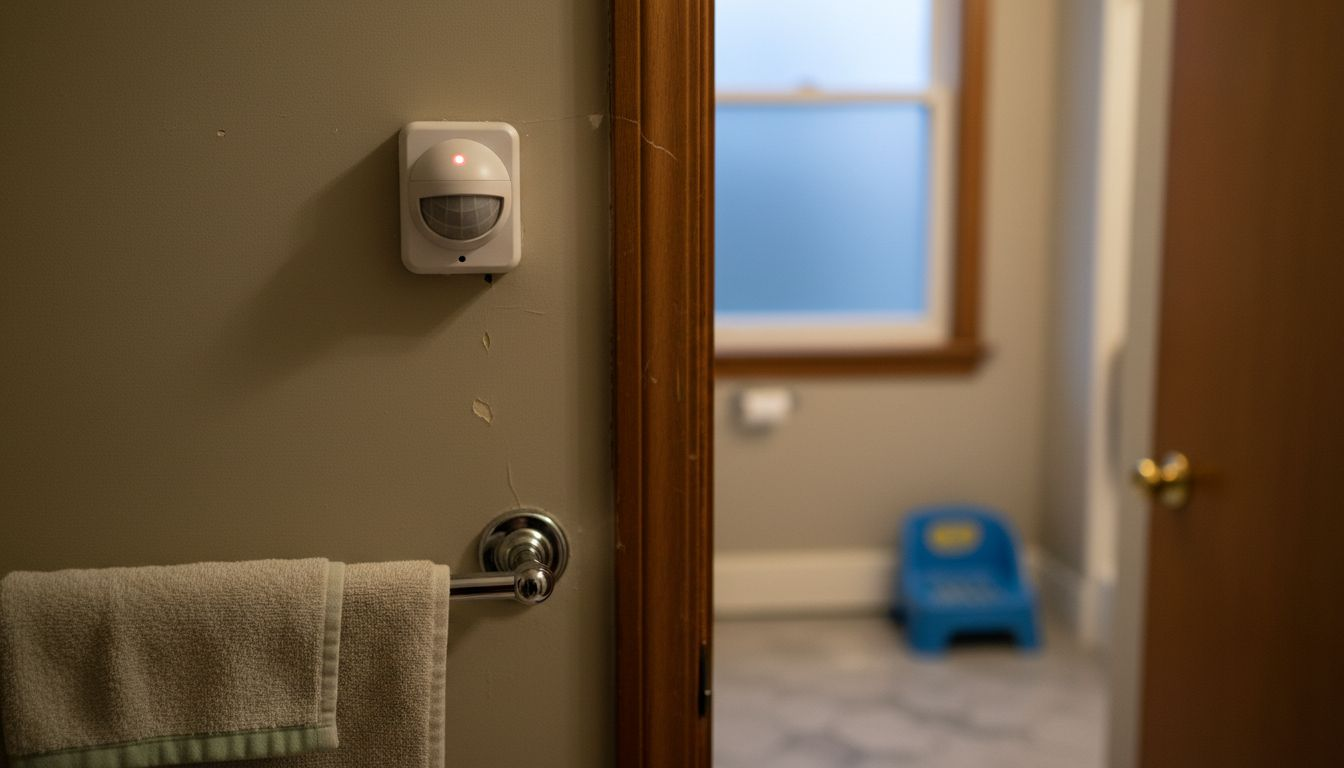
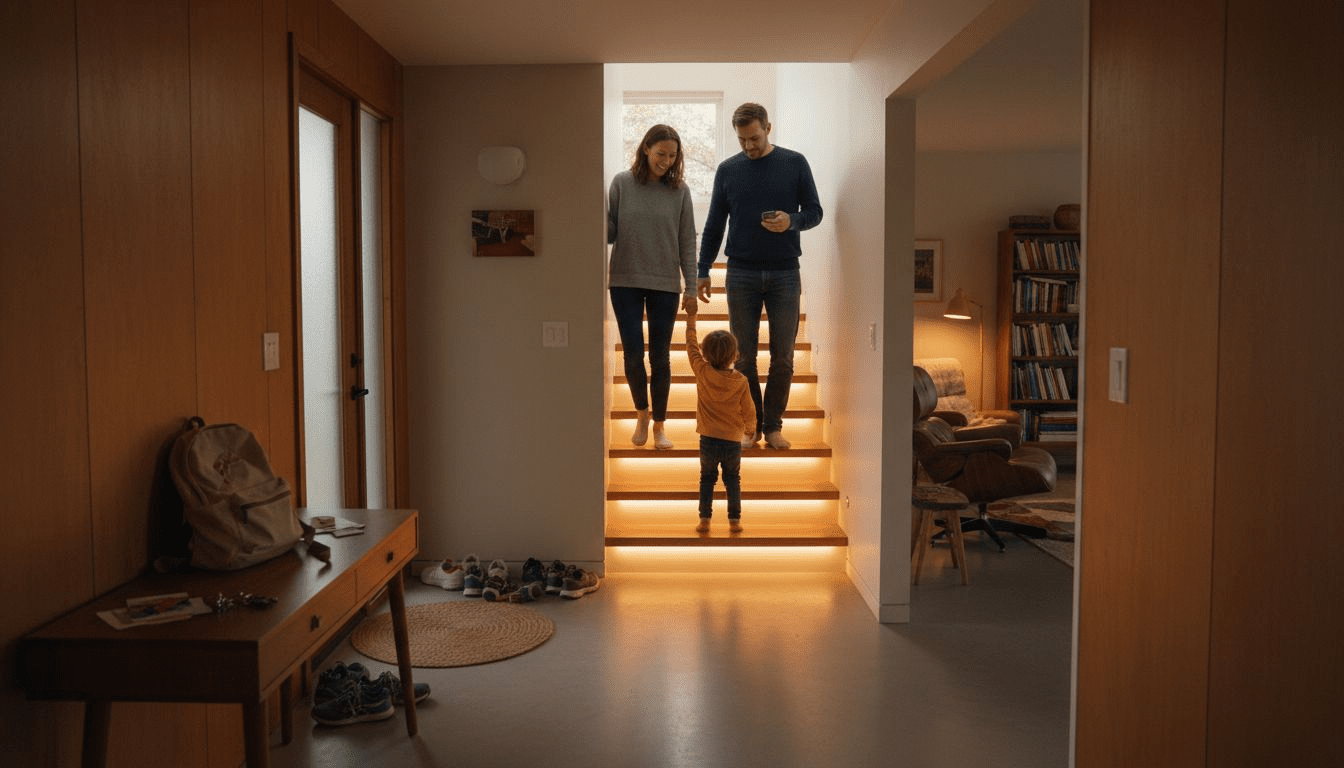
The practical applications align perfectly with how you actually live in your home. Motion sensor lighting works exceptionally well in entryways, hallways, bathrooms, closets, and staircases where you need hands-free activation. For safety, it illuminates potential hazards before you reach them. For convenience, you’re never fumbling for a light switch. And the automatic control of lighting systems enhances both convenience and energy efficiency by ensuring lights operate only when needed. This is why motion sensor technology has become increasingly common in modern homes, especially in urban apartments and townhouses where energy efficiency and smart automation directly impact monthly utility costs.
Pro tip: When installing motion sensor lights, place them where you naturally move through spaces at night, such as near bedroom doors or along hallway paths, and set the time delay between 1-3 minutes so lights don’t shut off while you’re still in the area but also don’t waste energy staying on unnecessarily long.
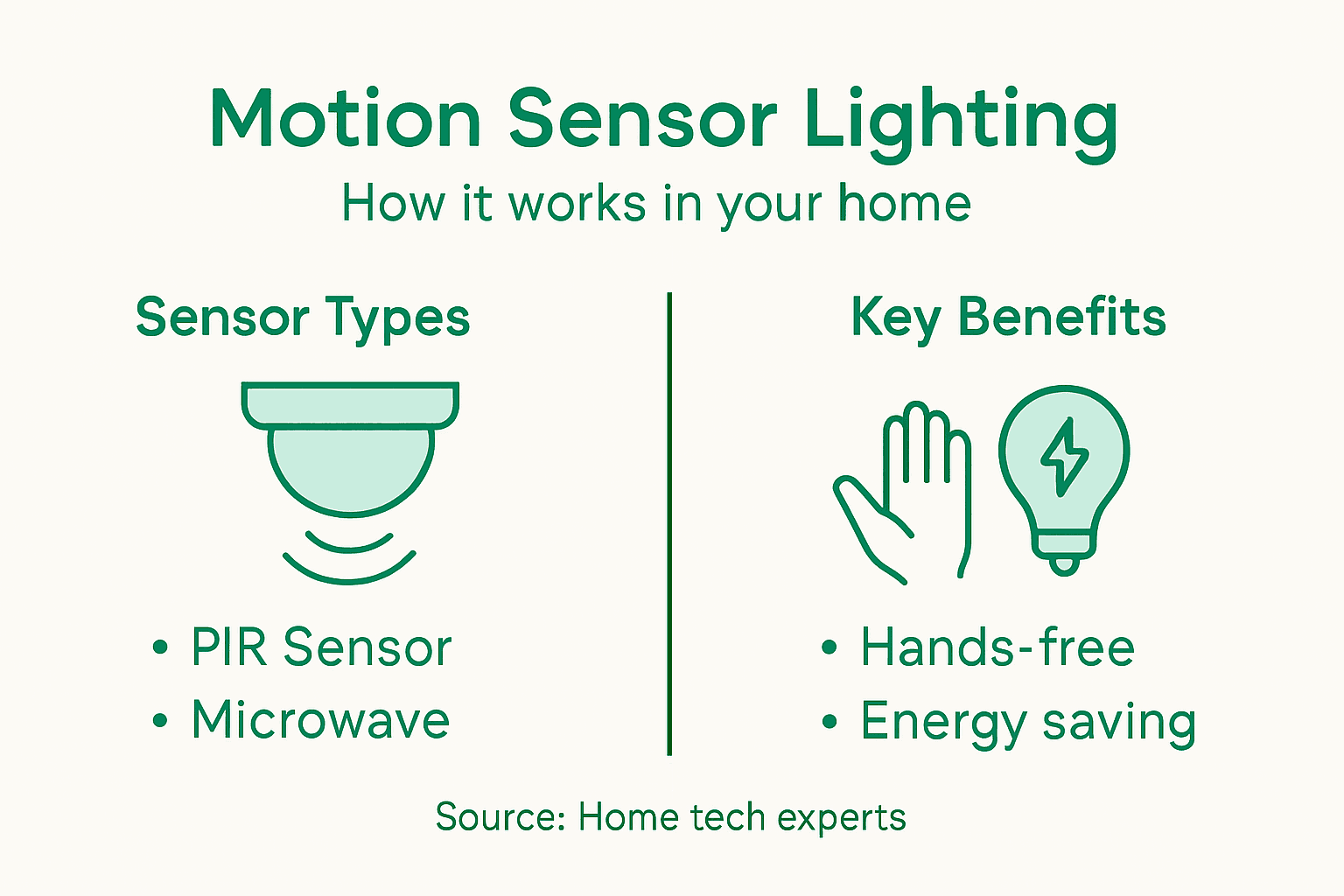
Motion sensor lighting relies on different detection technologies, each with its own strengths depending on your home layout and specific needs. Understanding these types helps you choose the right solution for different areas of your urban home. The most common approach uses Passive Infrared (PIR) sensors, which detect the heat signature changes emitted by people and objects as they move. When someone walks through a room, their body temperature differs from the surrounding environment, and the PIR sensor picks up that infrared radiation shift. This triggers the lights to turn on. PIR sensors are reliable, affordable, and widely used in residential settings because they work well in typical home conditions without requiring power to emit any signals.
The second major type is microwave sensors, which operate differently than PIR. These sensors actively emit microwave signals and then detect how those signals bounce back when something moves. Because microwaves can penetrate certain materials and work over longer distances, they’re useful in larger spaces or situations where there are obstructions between the sensor and the movement. However, they can sometimes trigger false alarms if they detect vibrations or movement through walls. A third option combines the best of both worlds: dual-technology sensors blend PIR and microwave detection together. By requiring both systems to detect motion before triggering the lights, dual-technology sensors dramatically reduce false alarms. This matters in busy urban apartments where outside traffic vibrations or neighboring activity might set off a basic microwave sensor.
For your home, Passive Infrared sensors represent the most practical choice for general household lighting because they’re energy efficient and don’t suffer from the false alarm issues that sometimes plague microwave sensors alone. However, if you have a larger entryway or an open-concept kitchen and living area, a microwave or dual-technology sensor might better serve your needs by detecting movement across a wider area. The key difference is that PIR sensors excel at detecting body heat changes in confined spaces, while microwave sensors work better for continuous coverage across broader zones. Your choice should match your specific layout. A narrow hallway or small bathroom calls for PIR, while a spacious living room or large kitchen might benefit from wider coverage that microwave technology provides.
Here’s a quick comparison of motion sensor types and their best use cases:
| Sensor Type | Detection Method | Ideal Locations | Potential Drawbacks |
|---|---|---|---|
| Passive Infrared | Senses body heat shift | Hallways, bathrooms, closets | Less reliable in large spaces |
| Microwave | Emits microwaves | Large rooms, open kitchens | False triggers from vibrations |
| Dual-Technology | Combines PIR & microwave | Entryways, outdoor zones | Higher cost, complex setup |
Pro tip: Choose PIR sensors for small, enclosed spaces like hallways and bathrooms where they’ll reliably detect body heat, but select dual-technology sensors for larger open areas or outdoor spaces where you want to avoid false triggers from wind, rain, or vibrations.
Modern motion sensor lighting goes far beyond simply detecting movement and turning lights on. Today’s systems come packed with features designed to adapt to your lifestyle and integrate seamlessly with the rest of your smart home. The foundation of these features starts with adjustable timer settings that let you control how long lights stay on after motion stops. In a bathroom, you might set a 3-minute delay so lights don’t shut off while you’re still using the space. In a hallway, a 1-minute delay works fine since you’re just passing through. This customization means your lights behave intelligently rather than operating on a one-size-fits-all schedule.
Photosensor integration takes this one step further by adding ambient light detection to the equation. These sensors automatically disable the motion trigger during daylight hours when natural sunlight is abundant, preventing wasted energy from lights turning on unnecessarily in a bright room. Once evening falls and indoor light levels drop, the motion sensor reactivates. This combination of motion detection and daylight awareness creates a system that’s truly responsive to actual conditions in your home. You could also adjust sensitivity levels, which determines how easily the sensor detects movement. Higher sensitivity works better in large, open spaces where subtle movements occur at greater distances, while lower sensitivity prevents false triggers from pets or traffic outside your windows.
What really sets modern motion sensor lighting apart is smart home integration that enables remote control through apps and voice assistants. Many systems now work with popular smart home platforms, allowing you to monitor and adjust your lighting from your smartphone whether you’re in your apartment or across the city. You can schedule lights to turn on before you arrive home from work, create scenes for different times of day, and even integrate motion sensors with other smart devices. Imagine your motion-activated hallway light triggering a smart speaker to play your favorite music, or coordinating with your smart lock to welcome you when you arrive. For urban homeowners managing multiple areas and devices, this level of automation transforms your home from a collection of separate systems into a cohesive, intelligent living space that anticipates your needs and adapts throughout the day.
Here’s a summary of smart motion sensor lighting features and their impact:
| Feature | Function | Lifestyle Benefit |
|---|---|---|
| Adjustable timer | Controls light duration after motion | Prevents unwanted shutdowns |
| Photosensor integration | Detects ambient light | Reduces energy consumption |
| Sensitivity settings | Adjusts movement detection range | Minimizes false alarms |
| Smart home integration | App and voice control | Remote access, automation |
Pro tip: Start by installing motion sensors in high-traffic areas like entryways and hallways where you’ll see immediate energy savings, then gradually add them to other spaces while fine-tuning sensitivity and timer settings based on actual movement patterns in your home.
Motion sensor lighting solves real problems in specific areas of your home where hands-free illumination makes a genuine difference in your daily life. The most obvious application is security lighting outside your entryway and around your property. When someone approaches your front door or moves along your walkway at night, the lights instantly activate, deterring potential intruders while simultaneously welcoming you home. This is especially valuable in urban apartment buildings where common hallways and entry areas benefit from automatic illumination. Inside your home, motion sensors shine in spaces where you typically enter with your hands full or in darkness. A hallway leading to your bedroom at 2 a.m. becomes safely lit before you take a single step. Your bathroom doesn’t require you to find a light switch when half asleep. Your closet illuminates the moment you open the door, eliminating the awkward dance of reaching for a switch in the dark.
Beyond convenience, motion sensor lighting delivers measurable energy savings by automatically turning off lights in spaces you’ve left. Unlike traditional switches that rely on human memory, these systems ensure lights don’t stay on in empty rooms for hours. Consider your basement or home office. You step out for a quick break, forgetting to flip the switch. Motion sensors eliminate this waste automatically. Motion sensor lighting reduces electricity consumption by ensuring lights activate only when spaces are occupied, making them an effective strategy for energy conscious homeowners watching their utility bills climb each month. Garages represent another ideal application. You pull in from work with groceries and bags. The motion sensor lights your entire garage instantly without requiring you to fumble for switches. In your laundry room or utility closet, brief visits suddenly become well-lit tasks instead of shadowy searches through shelves.
For urban apartment dwellers specifically, motion sensors in shared spaces like building hallways create safer, more welcoming common areas without relying on someone remembering to manually control lights. These applications also enhance accessibility for elderly residents, children, and anyone with mobility challenges who benefit from hands-free activation. The versatility means you can customize placement based on your actual living patterns. Some people prioritize outdoor security with pathway and driveway lighting. Others focus on indoor convenience with hallway and bathroom sensors. Many take a blended approach, securing their perimeter while improving interior accessibility and energy efficiency throughout their living space.
Pro tip: Install motion sensors first in areas where you regularly move in darkness or with your hands full, such as hallways between bedrooms and bathrooms, then expand to utility spaces like closets and storage areas where you spend brief time intervals.
Motion sensor lighting delivers real advantages that make it worth considering for your home. The most immediate benefit is energy savings. Lights stay on only when someone is present, eliminating the waste from forgotten switches. Over a year, this adds up significantly on your electricity bill, especially in apartments where hallways and common areas run 24/7. Beyond cost, you gain convenience and accessibility. No more fumbling for switches with full hands or navigating dark spaces. This matters enormously for families with young children, elderly residents, or anyone with mobility challenges. There’s also a security advantage. Outdoor motion lights deter intruders by illuminating your property when someone approaches, creating an unwelcoming environment for potential burglars. Indoor motion sensors make it obvious when someone has been in a room, adding another layer of awareness to your home.
But motion sensors aren’t perfect, and understanding their limitations prevents frustration. The most common issue is false triggers. Your pet walks across a room and the light activates. Wind moves tree branches outside and outdoor sensors fire repeatedly. Heat sources like radiators or air vents can confuse infrared sensors, causing unnecessary activation. Sensors installed near heat sources or with obstructed views experience reduced reliability and frequent false alarms, which becomes annoying quickly. Some systems also suffer from activation delays. You walk into a space expecting instant light, but the sensor needs a moment to register your presence. In a bathroom, this slight lag feels more dramatic than in a hallway. Conversely, lights sometimes refuse to turn off if the sensor thinks it still detects motion, leaving you sitting in darkness waiting for the timeout to expire. These limitations aren’t deal breakers, but they require honest consideration.
Common installation mistakes amplify these problems significantly. Placing sensors where they can’t see movement effectively wastes the investment. A hallway sensor positioned at an angle where people walk perpendicular to its view won’t detect your approach. Sensors positioned too high or too low miss typical human movement patterns. Choosing the wrong sensor type for your environment causes endless frustration. A basic microwave sensor in a pet-heavy household triggers constantly. A PIR sensor in a large open space misses movement at the edges. The solution is straightforward: understand your space before installing, position sensors where they’ll actually detect the movement you want, keep them away from heat sources and direct sunlight, and select sensor types matched to your specific conditions. When installed thoughtfully, the benefits far outweigh the limitations.
Pro tip: Test your motion sensor placement by walking through the space at various angles and distances before permanent installation, and always position sensors to avoid direct heat sources, sunlight, and objects that obstruct the detection pattern.
Struggling with dark hallways or fumbling for switches when your hands are full? Motion sensor lighting technology brings convenience, safety, and energy savings right to your home. With features like adjustable timer settings and daylight detection, you can enjoy automatic lighting that activates only when needed. Explore how Smart Motion Sensor Lights Collection offers wireless, easy-to-install options designed specifically to match your lifestyle and home layout.

Take control of your lighting and transform your living space today. Visit Try Illuminate now to find smart, rechargeable motion sensor lights that make your home safer and more energy efficient without any wiring hassles. Discover personalized solutions, save on utility bills, and enhance your home’s ambiance with the latest in smart lighting technology. Don’t wait to experience the future of home automation.
Motion sensor lighting technology uses sensors to detect movement in an area and automatically turns lights on or off in response. This automation enhances convenience and energy efficiency, making it a valuable addition to modern homes.
Motion sensors primarily use Passive Infrared (PIR) technology, which detects heat signatures emitted by people and objects. Other types, like microwave sensors, emit microwave signals and detect their reflections, allowing for detection across larger spaces.
Ideal locations for motion sensor lights include entryways, hallways, bathrooms, closets, and staircases. These areas benefit from hands-free activation and enhanced safety by illuminating potential hazards automatically.
Yes, many modern motion sensor lighting systems can integrate with smart home platforms, allowing remote control via apps and voice assistants. This integration enhances convenience and allows for customizable lighting schedules and automated scenes.
7 Essential Types of Smart Lighting for Safer Homes
Discover 7 essential types of smart lighting for safer homes. Learn how each type can boost safety, save energy, and make installation easy for any homeowner.
Read more
Smart Lighting Terminology: What Homeowners Must Know
Smart lighting terminology explained for homeowners: learn key terms, wireless tech, real-world uses, savings, and pitfalls to avoid in modern home lighting.
Read more