

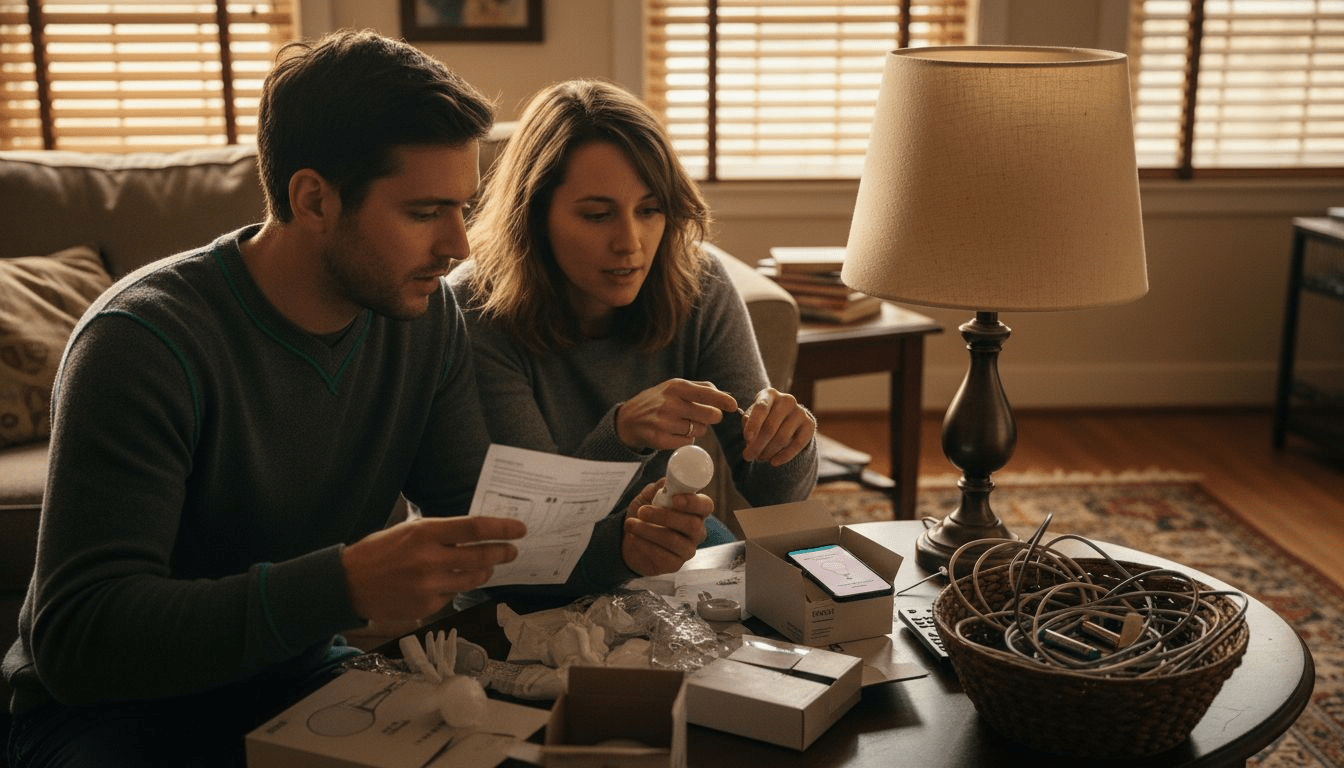
Finding affordable ways to boost safety and save money at home often starts with how you light each space. Many urban homeowners want reliable solutions that fit busy lives and tight budgets. Wireless DIY smart lighting puts you in control, making it easy to create secure and energy-conscious rooms without expensive rewiring. Discover how intelligent lighting control systems can help you assess, upgrade, and fine-tune your home’s lighting for greater comfort and efficiency.
| Key Point | Explanation |
|---|---|
| 1. Assess Current Lighting Needs | Conduct a walkthrough to identify areas needing better illumination and flexibility in lighting control. |
| 2. Choose Suitable Wireless Smart Fixtures | Look for fixtures that support common protocols like Wi-Fi and Zigbee to ensure compatibility and effectiveness. |
| 3. Simplify Installation with Tool-Free Methods | Use modern fixture designs that allow for easy installation without professional tools or complex wiring. |
| 4. Configure Smart Automation Features | Set up automation like motion sensors and schedule programming to enhance convenience and energy efficiency. |
| 5. Regularly Verify and Adjust Performance | Continuously monitor your lighting system’s performance and make necessary adjustments to optimize functionality. |
Successfully upgrading your home’s lighting requires a strategic approach to understanding your current setup. This initial assessment will help you map out precise improvements that enhance both functionality and energy efficiency.
Start by conducting a comprehensive walkthrough of your home, noting each room’s existing lighting configuration. Pay attention to the type, placement, and performance of current light fixtures. Look for key indicators that suggest potential upgrades:
The U.S. Department of Energy recommends exploring lighting control devices that can automatically manage your home’s illumination. These smart technologies include motion sensors, dimmers, and timers that not only improve convenience but can significantly reduce energy consumption.
Consider mapping out your lighting needs by creating a simple room-by-room chart. Document current light sources, their wattage, and potential automation opportunities. This visual guide will become your roadmap for smart lighting transformation.
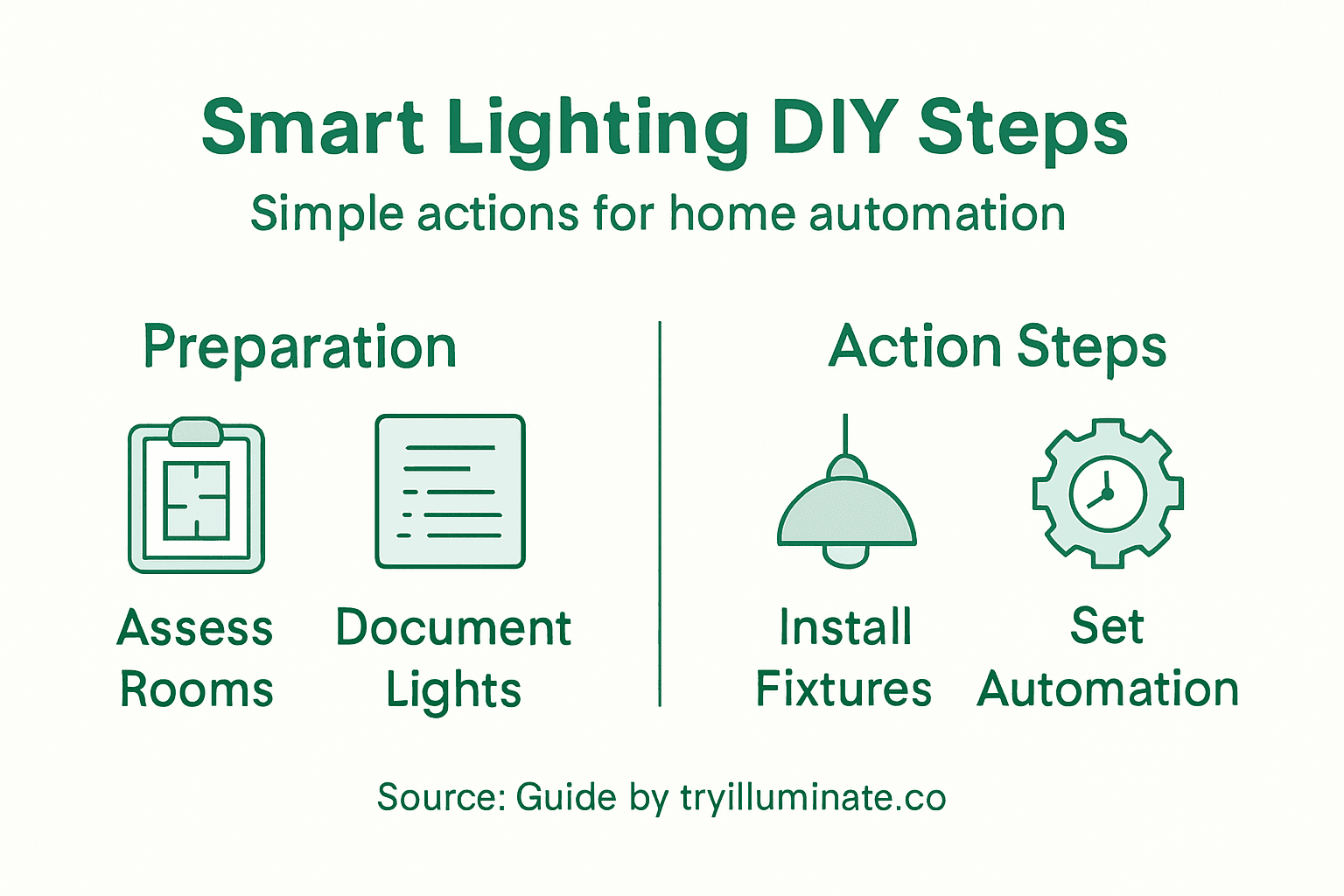
Pro tip: Take photos of each room’s current lighting setup to help you visualize potential improvements and track your smart home lighting journey.
Selecting the right wireless smart lighting fixtures is a critical step in transforming your home’s illumination strategy. This process involves understanding your specific needs and identifying technologies that offer maximum flexibility and efficiency.
Start by evaluating the intelligent lighting control systems that can dramatically improve your home’s lighting performance. Modern wireless fixtures offer remarkable benefits beyond traditional lighting solutions:
When shopping for wireless smart lighting, consider key technical specifications that align with your home’s requirements. Look for fixtures that support multiple communication protocols like Wi-Fi, Zigbee, or Bluetooth, ensuring broad compatibility with your existing smart home ecosystem.
Here is a summary of popular wireless smart lighting technologies and their unique strengths:
| Technology | Compatibility | Main Advantage |
|---|---|---|
| Wi-Fi | Works with most routers | Easy integration, remote control |
| Zigbee | Needs compatible hub | Reliable mesh networking |
| Bluetooth | Direct device connections | Quick setup, no hub needed |
| Z-Wave | Requires Z-Wave hub | Strong security, mesh support |
Wireless smart lighting technologies provide unprecedented control and convenience, transforming how you illuminate and interact with your living spaces.
Prioritize fixtures with adjustable color temperatures, dimming capabilities, and integrated motion sensors. These features allow you to create dynamic lighting environments that adapt to your lifestyle and enhance overall home ambiance.
Pro tip: Purchase a few test fixtures first to ensure compatibility and performance before committing to a full home lighting upgrade.
DIY smart lighting installation doesn’t require professional skills or complex tools. With modern wireless technologies, you can transform your home’s lighting landscape quickly and efficiently.
Modern wireless lighting solutions offer simple electric lighting controls that eliminate traditional installation barriers. These innovative systems are designed for hassle-free setup, allowing homeowners to upgrade their lighting without specialized equipment:
Wireless smart lighting installation is about simplicity, flexibility, and empowering homeowners to customize their living spaces without extensive technical knowledge.
When installing your wireless smart lights, focus on strategic placement that maximizes coverage and enhances your home’s functionality. Consider locations near power outlets, areas with existing electrical infrastructure, and spaces that benefit most from automated lighting.
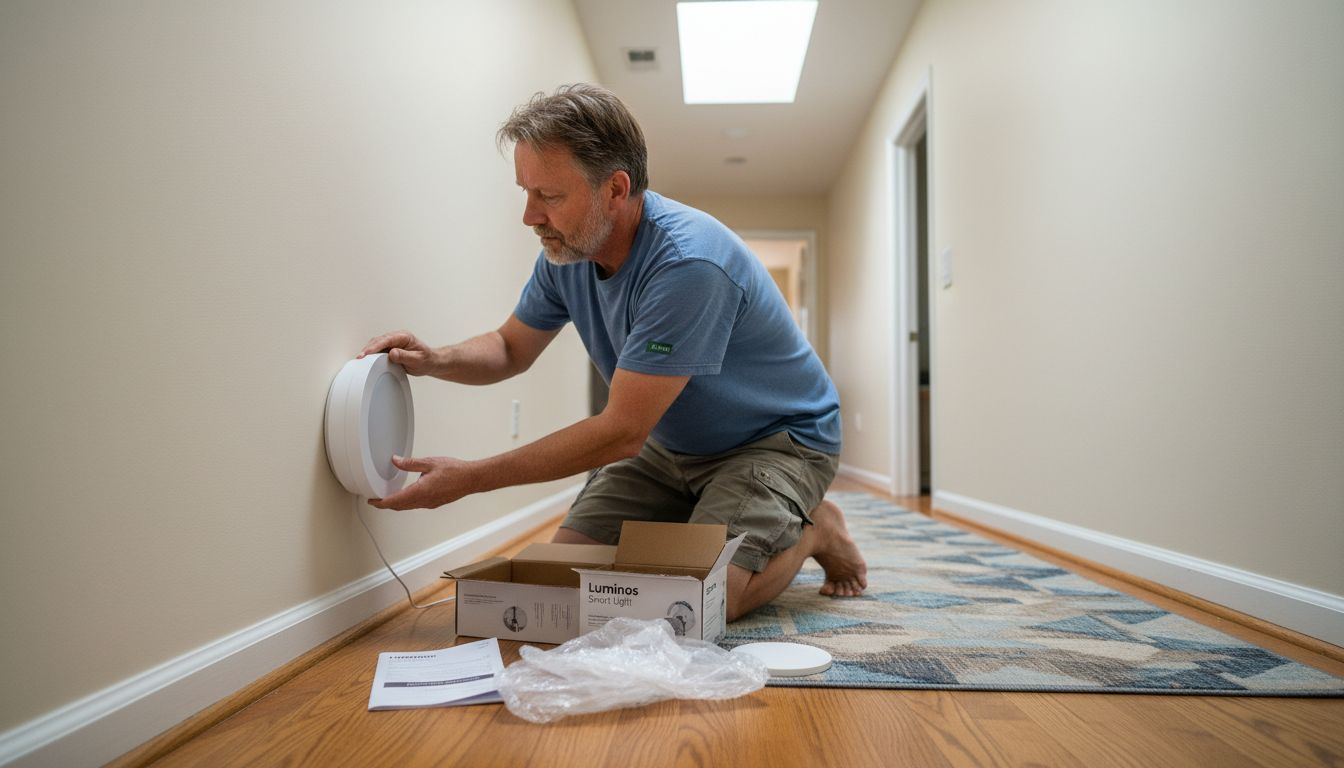
Pay close attention to manufacturer instructions, as each wireless lighting system might have unique mounting requirements. Some fixtures use adhesive backing, while others might require minimal screwing or magnetic alignment.
Pro tip: Keep the original packaging and installation manual for each fixture until you’re completely satisfied with its performance and placement.
Transforming your home’s lighting into an intelligent, energy-efficient system requires strategic configuration of automation features that adapt to your lifestyle and environmental conditions.
Modern smart lighting systems offer advanced energy-saving home automation that go beyond simple on-and-off functionality. These sophisticated technologies provide multiple layers of intelligent control:
Smart lighting automation is about creating seamless, intuitive environments that respond intelligently to your daily rhythms and energy consumption needs.
When configuring your system, focus on creating dynamic lighting profiles that automatically adjust based on time of day, occupancy, and ambient light conditions. This approach not only enhances comfort but significantly reduces unnecessary energy consumption.
Experiment with different automation settings, such as gradual dimming during evening hours or automatic shutoff when rooms are unoccupied. Most smart lighting systems allow granular customization through smartphone apps, enabling you to fine-tune your home’s lighting ecosystem.
Pro tip: Start with one or two rooms when configuring automation to understand your preferences before implementing a whole-home strategy.
Successfully implementing smart lighting requires ongoing performance verification and strategic fine-tuning to ensure your system meets your home’s unique requirements and delivers optimal energy efficiency.
Utilize smart lighting performance certification standards as your guide for systematic evaluation. A comprehensive verification process involves multiple assessment stages:
Performance verification is not a one-time event but an ongoing process of refinement and optimization.
Pay special attention to how your smart lighting system responds under various conditions. Test motion sensor sensitivity, automatic dimming performance, and the reliability of scheduled lighting scenes. Most smartphone apps provide detailed analytics that help you understand your system’s real-world performance.
Don’t hesitate to make incremental adjustments. Small tweaks in sensor placement, timing configurations, or brightness levels can significantly improve overall system responsiveness and energy efficiency.
Consider these key areas to monitor after installing smart lighting:
| Assessment Area | What to Track | Potential Adjustment |
|---|---|---|
| Power Efficiency | Energy usage patterns | Reduce brightness, adjust schedules |
| Device Response | Speed of light activation | Reposition sensors or hubs |
| Coverage | Zones with sufficient light | Move or add fixtures as needed |
| User Convenience | Ease of use for all family | Fine-tune automation preferences |
Pro tip: Create a spreadsheet to track your lighting system’s performance metrics, helping you systematically identify and implement improvements.
Struggling with complicated lighting setups or energy-hungry bulbs? This DIY Smart Lighting Guide shows how wireless, tool-free installations and intelligent automation can transform your home into a modern, efficient space. Experience ease and energy savings by choosing smart lighting that adapts to your lifestyle through features like motion activation and daylight detection. Discover how simple it is to enhance safety and ambiance without rewiring or technical hassle.
Explore the Smart Motion Sensor Lights Collection at https://tryilluminate.co and start your effortless home upgrade now. Take advantage of customizable, rechargeable lighting fixtures designed for quick installation and reliable performance. Visit our Best Sellers to find popular options that customers love and see how smart lighting can bring convenience and cost savings to your daily living. Make the switch today and experience the future of home illumination.
To assess your current lighting needs, conduct a thorough walkthrough of your home and take notes of each room’s existing lighting setup. Look for areas with inadequate illumination or high energy consumption and create a chart mapping current light sources and their wattage to identify potential upgrades.
When selecting wireless smart lighting fixtures, evaluate the communication protocols they support, such as Wi-Fi, Zigbee, or Bluetooth, to ensure compatibility with your smart home system. Prioritize features like adjustable color temperatures and motion sensors to enhance flexibility in lighting control.
To install wireless smart lighting without tools, look for fixtures that use peel-and-stick mounting or magnetic systems, which simplify the process. Follow manufacturer instructions carefully to achieve a secure setup quickly and efficiently, usually in under an hour.
Configure automation features such as motion-activated lighting, daylight responsiveness, and scheduled programming to enhance energy efficiency. By creating dynamic profiles that respond to occupancy, you can significantly reduce energy consumption, potentially lowering usage by ~20%.
To verify the performance of your smart lighting system, test its functionality across different scenarios and monitor energy consumption. Adjust settings based on your observations, focusing on areas like sensor sensitivity and coverage to ensure optimal performance.
If your smart lights are not working as intended, start by checking the placement of sensors and the configuration of automation settings. Make incremental adjustments and consistently monitor performance metrics to identify areas for improvement, making necessary tweaks to enhance responsiveness.

Easy Lighting Installation Process for Smart Home Upgrades
Follow this easy lighting installation process to quickly upgrade your home with smart, energy-efficient lights. Learn step-by-step and achieve seamless results.
Read more
7 Smart Examples of Motion Sensor Lights for Homes
Discover 7 practical examples of motion sensor lights for home safety. Learn how to upgrade lighting with easy, wireless solutions to save energy and add convenience.
Read more