

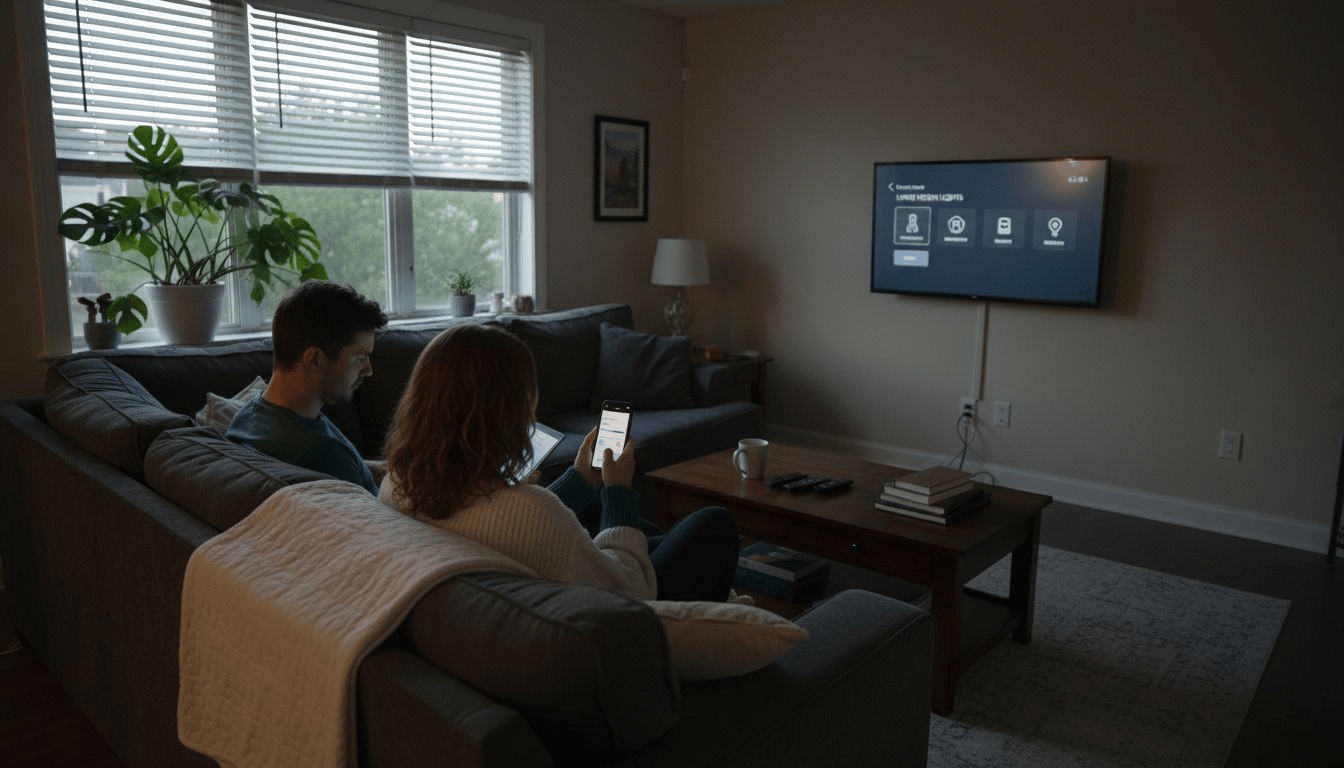
City living often means balancing comfort with efficiency, especially for those who want a home that adapts as quickly as their routines change. Smart lighting brings together cutting-edge technology and thoughtful design, giving homeowners remote control and adaptable settings for every room. With the power of the Internet of Things, these intelligent systems offer more than brightness—they deliver energy-efficient, personalized illumination that boosts safety, reduces waste, and makes setup surprisingly DIY-friendly.
| Point | Details |
|---|---|
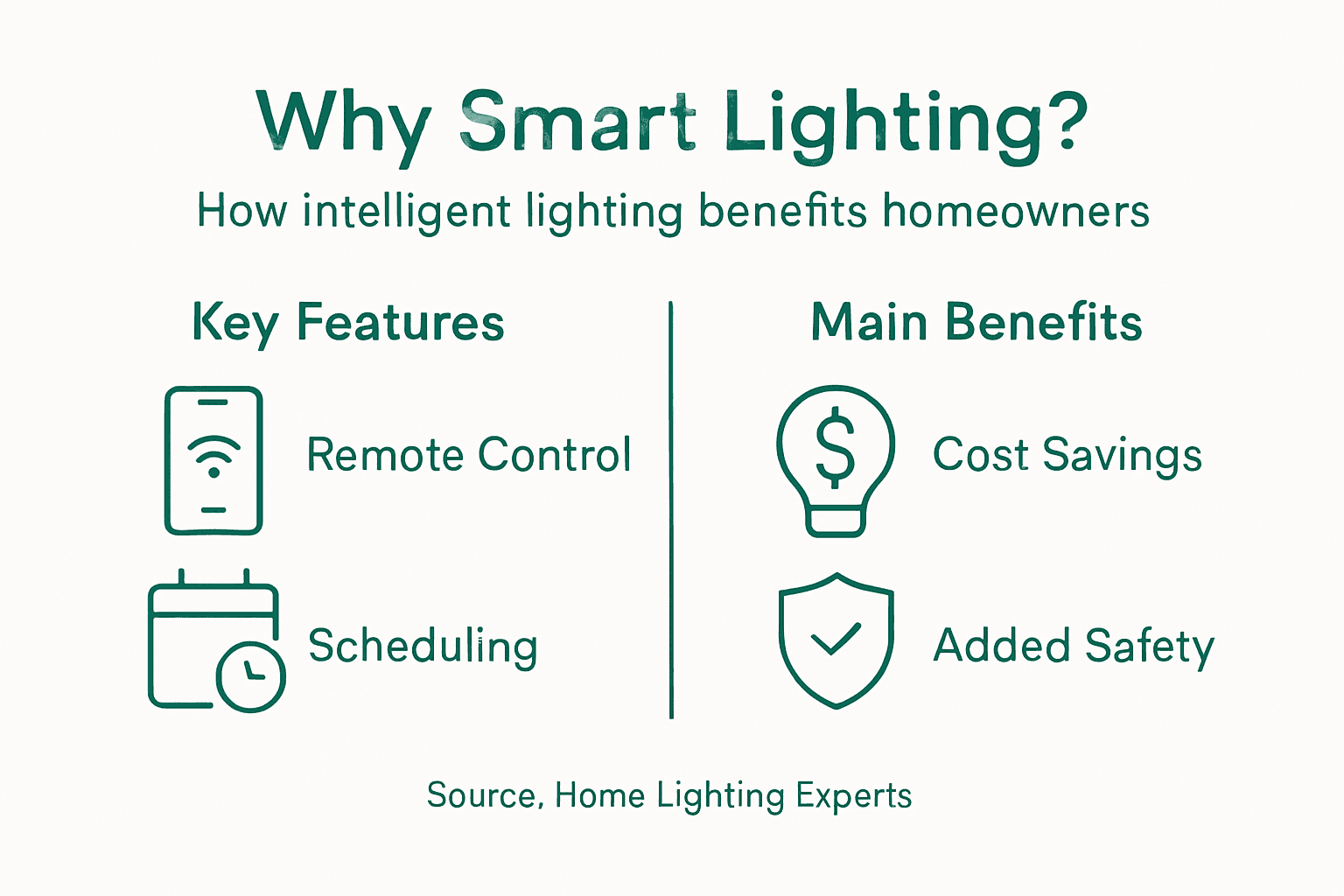
| Smart Lighting Enhances Control and Efficiency | Smart lighting enables advanced control through IoT integration, allowing for remote access, automated adjustments, and personalized experiences. |
| Improves Safety and Comfort | Intelligent systems enhance home safety with features like motion activation and emergency lighting, while also creating comfortable, adaptable environments. |
| Promotes Energy Efficiency and Cost Savings | Smart lighting technologies can reduce electricity usage and costs significantly, with features that automate brightness and utilize LED technology. |
| Careful Planning is Essential | Successful implementation requires strategic planning and awareness of compatibility to avoid common pitfalls in smart lighting integration. |
Smart lighting transforms traditional residential lighting systems into intelligent, interconnected networks that provide unprecedented control and efficiency. By integrating advanced technologies, these systems go far beyond simple illumination, offering homeowners dynamic ways to manage their living environments.
At its core, smart lighting represents a sophisticated networked approach to home illumination. These systems leverage Internet of Things (IoT) connectivity to enable remote control, automated adjustments, and personalized lighting experiences. Unlike conventional lighting, smart solutions adapt to homeowners’ preferences and environmental conditions.
Key characteristics of smart lighting include:
Intelligent lighting systems represent more than technological novelty. They signify a fundamental shift in how we interact with our living spaces, transforming lighting from a basic utility into an interactive, responsive environment that enhances comfort, safety, and energy efficiency.
Pro tip: Start your smart lighting journey by selecting one room and gradually expanding your system to understand its full potential and compatibility with your home’s existing infrastructure.
Smart lighting encompasses a diverse range of technologies designed to revolutionize home illumination beyond traditional lighting solutions. Advanced sensor-driven systems enable homeowners to create dynamic, responsive lighting environments that adapt to their unique preferences and lifestyle needs.
These sophisticated systems typically include several core types of smart lighting technologies:
Key features of modern smart lighting systems go far beyond simple illumination. By combining environmental sensing and user preferences, these systems provide unprecedented control over home lighting environments. Homeowners can now schedule, automate, and customize lighting with remarkable precision, reducing energy consumption while enhancing comfort and safety.
The technological sophistication of smart lighting allows for granular control that transforms residential spaces. Intelligent systems can now adjust brightness, color temperature, and energy consumption in real-time, creating personalized lighting experiences that respond dynamically to occupancy, time of day, and individual preferences.
Pro tip: When selecting smart lighting, prioritize systems with flexible integration capabilities to ensure compatibility with your existing smart home infrastructure.
Compare popular smart lighting technologies at a glance:
| Technology Type | Main Benefit | Typical Use Case |
|---|---|---|
| LED Fixtures | High energy efficiency | General illumination, whole home |
| Motion Sensors | Hands-free activation | Hallways, outdoor security |
| Color-Changing Bulbs | Mood customization | Living rooms, entertainment spaces |
| Circadian Rhythm Lighting | Wellness support | Bedrooms, home offices |
| Voice Control | Convenient operation | Kitchens, bedrooms |
Smart lighting transforms home environments by significantly enhancing both safety and personal comfort through intelligent, adaptive technologies. Sensor-enabled systems play a vital role in creating spaces that dynamically respond to occupants’ needs, providing unprecedented levels of protection and well-being.
Safety improvements offered by smart lighting include:
Comfort enhancements go beyond traditional lighting functionality. Adaptive illumination systems contribute significantly to user well-being by creating personalized environments that support natural circadian rhythms and emotional states. These intelligent systems can mimic natural daylight progression, adjust color temperatures, and create ambient settings that reduce eye strain and improve overall mental relaxation.
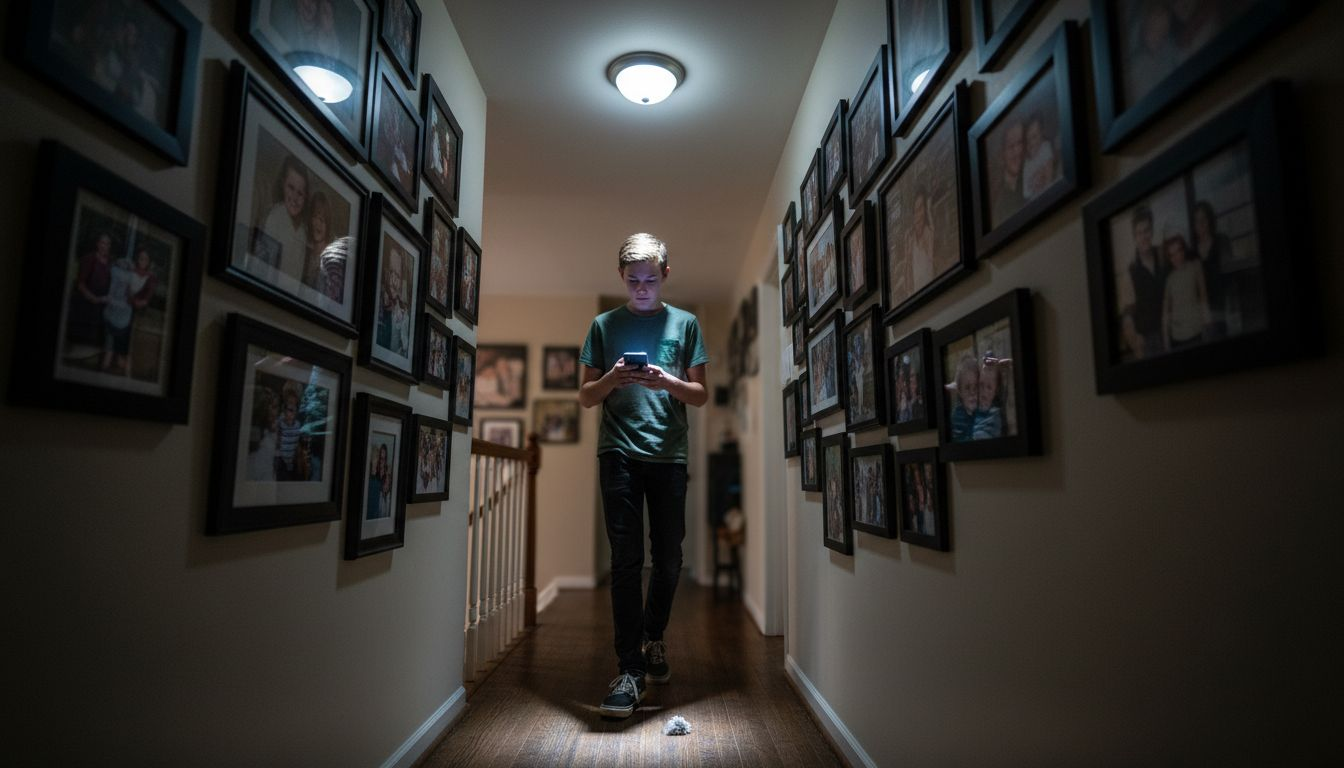
The technological sophistication of smart lighting allows for unprecedented control over home environments. Homeowners can now program lighting scenarios that seamlessly transition between work, relaxation, and security modes, ensuring optimal illumination that adapts to changing daily activities and personal preferences.
Pro tip: Consider installing motion-sensor lights in key areas like hallways and exterior entrances to maximize both safety and energy efficiency.
Smart lighting technologies represent a revolutionary approach to reducing household energy consumption and minimizing electricity expenses. Intelligent control systems dynamically manage light output by leveraging advanced sensor technologies that optimize illumination based on real-time environmental conditions.
Key energy-saving features of smart lighting include:
Wireless smart lighting systems offer substantial cost-effective benefits by providing centralized management that dramatically reduces operational expenses. These innovative solutions can potentially lower electricity bills by 50-75% compared to traditional lighting systems, making them an attractive investment for budget-conscious homeowners.
The long-term financial advantages of smart lighting extend beyond immediate energy savings. By utilizing advanced LED technologies and intelligent control mechanisms, homeowners can significantly reduce maintenance costs, decrease bulb replacement frequencies, and create more sustainable home environments that align with modern energy conservation principles.
Pro tip: Install smart lighting in high-traffic areas first to maximize your initial energy savings and gradually expand your system for comprehensive home coverage.
Smart lighting installation represents a significant departure from traditional lighting approaches, offering homeowners unprecedented flexibility and technological sophistication. DIY smart lighting options provide cost-effective alternatives to conventional professional installations, empowering tech-savvy homeowners to customize their lighting environments.
Key differences between DIY and traditional lighting systems include:
Smart lighting controls differ fundamentally from traditional systems by offering automated management capabilities that traditional setups cannot match. While conventional lighting relies on manual switches and fixed configurations, smart systems provide dynamic, intelligent control that adapts to homeowners’ changing needs and preferences.
The decision between DIY and professional installation ultimately depends on individual technical comfort, budget constraints, and desired system complexity. Homeowners with moderate technical skills can successfully implement many smart lighting solutions, while those seeking comprehensive, integrated systems might benefit from professional expertise to ensure optimal performance and seamless integration.
Here’s a side-by-side view of DIY and traditional smart lighting installation aspects:
| Aspect | DIY Smart Lighting | Traditional Installation |
|---|---|---|
| Initial Cost | Lower, pay only for devices | Higher, includes labor fees |
| Installation Time | Short, often under a day | Longer, may require scheduling |
| Technical Skill Needed | Moderate, can be self-taught | Minimal, handled by pros |
| System Flexibility | Easily scalable as needed | Less flexible post-installation |
Pro tip: Start with a small, manageable smart lighting project to build confidence and technical skills before expanding to whole-home installation.
Smart lighting implementation requires careful planning and strategic decision-making to maximize effectiveness and avoid costly errors. Lighting design mistakes can significantly impact home functionality and overall user experience, making proactive prevention crucial for homeowners.
Common smart lighting missteps include:
Standardized interfaces and coordinated planning are essential for avoiding integration challenges. Homeowners should carefully assess their specific requirements, understand their home’s technological capabilities, and select systems that offer scalability and seamless connectivity.
Successful smart lighting implementation demands a holistic approach that balances technological sophistication with practical usability. By understanding potential pitfalls and conducting thorough research, homeowners can create intelligent lighting environments that enhance comfort, energy efficiency, and overall living experience without unnecessary complications.
Pro tip: Create a detailed home lighting blueprint before purchasing any smart lighting components to ensure comprehensive coverage and compatibility.
The article highlights the challenges homeowners face with traditional lighting systems such as lack of automation, inefficiency, and limited control over home ambiance and safety. If you want to overcome these issues by embracing adaptive, energy-saving, and user-friendly solutions, then upgrading to smart lighting is essential. Concepts like motion-activated lights, wireless control, and personalized settings all play a major role in transforming your home environment.
Discover the power of wireless and rechargeable smart lighting that installs quickly without the need for electrical expertise at Try Illuminate. Explore our Smart Motion Sensor Lights Collection to enhance safety in hallways, stairs, and outdoor spaces with automatic illumination that responds when you need it most.
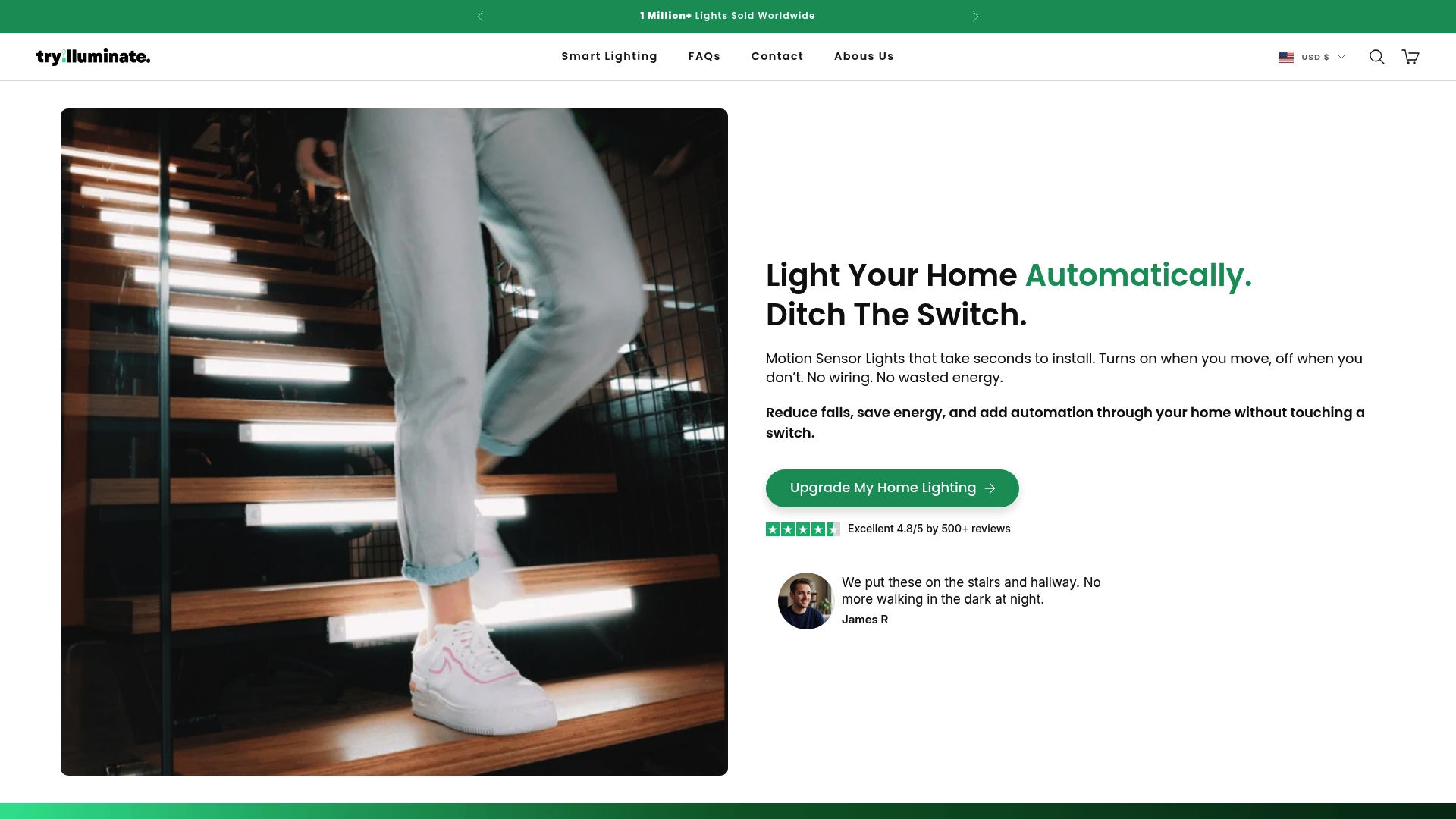
Ready to make your home safer, more comfortable, and energy efficient? Visit Try Illuminate today and take the first step toward hassle-free smart lighting. For popular choices proven by homeowners just like you, see our Best Sellers and start upgrading your lighting experience now.
Smart lighting refers to advanced lighting systems that utilize connectivity and automation to provide homeowners with enhanced control over their home illumination, allowing for features such as remote access, adaptive brightness, and energy monitoring.
Smart lighting improves energy efficiency by using automated brightness adjustments based on ambient light levels, occupancy detection to eliminate unnecessary energy waste, and detailed energy consumption tracking through smartphone applications.
Smart lighting enhances safety by providing automatic illumination in high-risk areas, motion-activated lights to deter intruders, gradual dimming to prevent sudden darkness, and emergency pathway lighting during power outages.
Many smart lighting systems come with DIY installation options that are easy to set up for tech-savvy homeowners. However, if you want a comprehensive, integrated system, hiring a professional may ensure optimal performance and seamless integration.

Role of Smart Lighting – How It Transforms Home Living
Explore the role of smart lighting in home automation, energy-saving technology, ease of installation, and enhancing daily safety and ambiance.
Read more
Easy Lighting Installation Process for Smart Home Upgrades
Follow this easy lighting installation process to quickly upgrade your home with smart, energy-efficient lights. Learn step-by-step and achieve seamless results.
Read more