


Nearly 75 percent of American households now consider motion sensor lights a top upgrade for smart home safety and energy savings. Homeowners everywhere want solutions that save power and make daily life easier, especially in busy indoor spaces where manual switches are inconvenient. Discover how motion sensor lights use advanced technologies to deliver reliable, hands-free illumination and security, helping you choose the smartest fit for your home’s needs.
| Point | Details |
|---|---|
| Energy Efficiency | Motion sensor lights can reduce electricity consumption by 50-75%, making them a cost-effective choice for homeowners. |
| Enhanced Security | These lights deter potential intruders by providing instant illumination in response to unexpected movement. |
| Smart Features | Modern motion sensor lights offer programmable settings and integration with smart home systems for added convenience. |
| Installation Considerations | Costs can range from $100 to $350, with wireless options offering simple DIY installation, while hardwired systems may require professional help. |
Motion sensor lights represent an innovative lighting technology that transforms how homeowners illuminate and secure their living spaces. These intelligent fixtures are designed to automatically detect movement and activate lighting without manual intervention. Advanced motion detection technologies enable these devices to provide seamless, energy-efficient illumination across residential environments.
The core functionality of motion sensor lights revolves around specialized sensors that identify movement within a designated area. Different sensor technologies power these systems, including Passive Infrared (PIR), Ultrasonic, Microwave, and Dual-Technology variants. Each sensor type offers unique capabilities for detecting motion. PIR sensors, for instance, track heat signatures emitted by people and animals, making them ideal for residential settings. Microwave sensors use radio waves to penetrate obstacles, providing broader coverage in complex spaces.
Understanding motion sensor light limitations is equally important. While these devices offer substantial benefits, they can occasionally produce false triggers from pets, moving vegetation, or passing vehicles. Sensor settings like detection range and sensitivity allow homeowners to fine-tune performance and minimize unwanted activations. Strategic placement and proper configuration are key to maximizing these lighting systems’ effectiveness and reliability.
Pro tip: Test your motion sensor lights during different times of day and in various weather conditions to ensure consistent and accurate performance.
Motion sensor lighting technologies have evolved dramatically, offering diverse sensor types tailored to specific home environments and functional requirements. Motion sensor technologies now include sophisticated options like Passive Infrared (PIR), Microwave, Ultrasonic, Dual Technology, Tomographic, and Vibration sensors, each designed to address unique spatial and detection challenges.
Passive Infrared (PIR) sensors remain the most common residential option, detecting heat signatures from people and animals with remarkable precision. Microwave sensors provide broader coverage by emitting radio waves that penetrate walls and furniture, making them ideal for complex indoor spaces like garages, basements, and open-concept living areas. Dual Technology sensors combine PIR and microwave technologies, significantly reducing false alarm rates by requiring motion detection confirmation from two different sensor types.
Smart home integration has transformed motion sensor lights from simple activation devices into intelligent ecosystem components. Modern motion sensor lights now feature programmable settings, smartphone app controls, adjustable sensitivity levels, and customizable illumination patterns. Homeowners can now configure lighting zones, set specific time-based activation rules, and even integrate motion sensors with broader home security and automation systems, creating a seamless and responsive living environment.
Pro tip: When installing motion sensor lights, strategically place sensors at key transition points and experiment with sensitivity settings to optimize coverage and minimize unnecessary activations.
Here’s a concise look at the main motion sensor types and their ideal home uses:
| Sensor Type | Detection Method | Best Use Cases |
|---|---|---|
| Passive Infrared | Senses heat from living things | Bedrooms, living rooms |
| Microwave | Detects motion with radio waves | Garages, open spaces |
| Ultrasonic | Uses sound waves for movement | Hallways, offices |
| Dual Technology | Combines PIR and microwave | High-security, false alarm areas |
| Tomographic | Senses motion through radio mesh | Large indoor spaces |
| Vibration | Feels surface vibrations | Doors, windows, machinery |
Motion sensor lights represent a revolutionary approach to home lighting, delivering substantial energy efficiency benefits through intelligent automation. Smart lighting technologies dramatically reduce electricity consumption by activating lights only when movement is detected, eliminating unnecessary energy waste associated with traditional lighting systems.
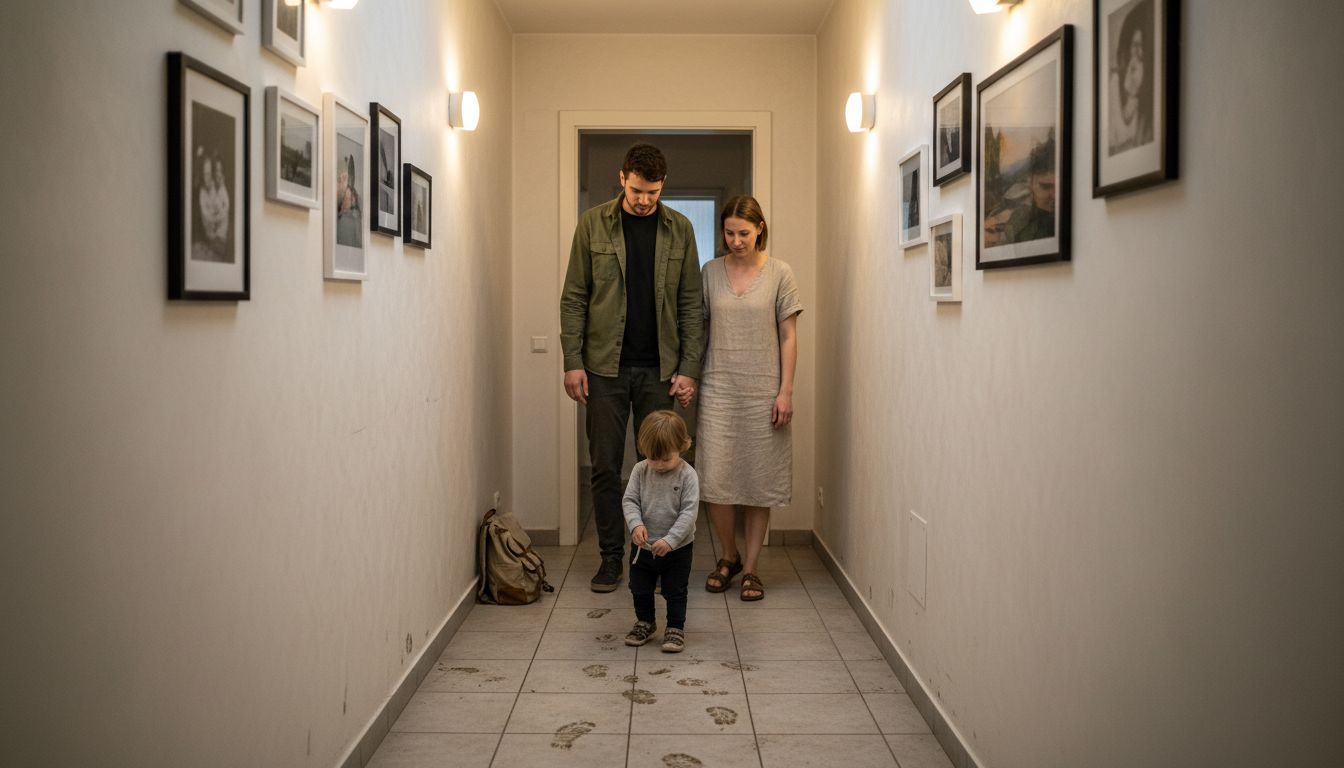
The safety advantages of motion sensor lights extend far beyond simple illumination. These intelligent systems significantly enhance home security by instantly flooding dark areas with light when unexpected movement occurs, effectively deterring potential intruders. Critical areas like entryways, hallways, and exterior pathways become automatically illuminated, reducing the risk of accidents and providing homeowners with an added layer of protection. By creating an unpredictable lighting pattern, motion sensors make homes appear actively monitored, which can discourage potential security threats.
Energy efficiency metrics demonstrate the substantial impact of motion sensor lighting. Typical households can reduce lighting-related electricity consumption by 50-75% by implementing these smart technologies. The sensors’ ability to automatically adjust based on occupancy means lights are never left on accidentally in empty rooms, creating both economic and environmental benefits. Modern motion sensor lights often include additional energy-saving features like adjustable brightness levels, timer settings, and daylight detection, further optimizing power consumption and reducing overall electrical expenses.
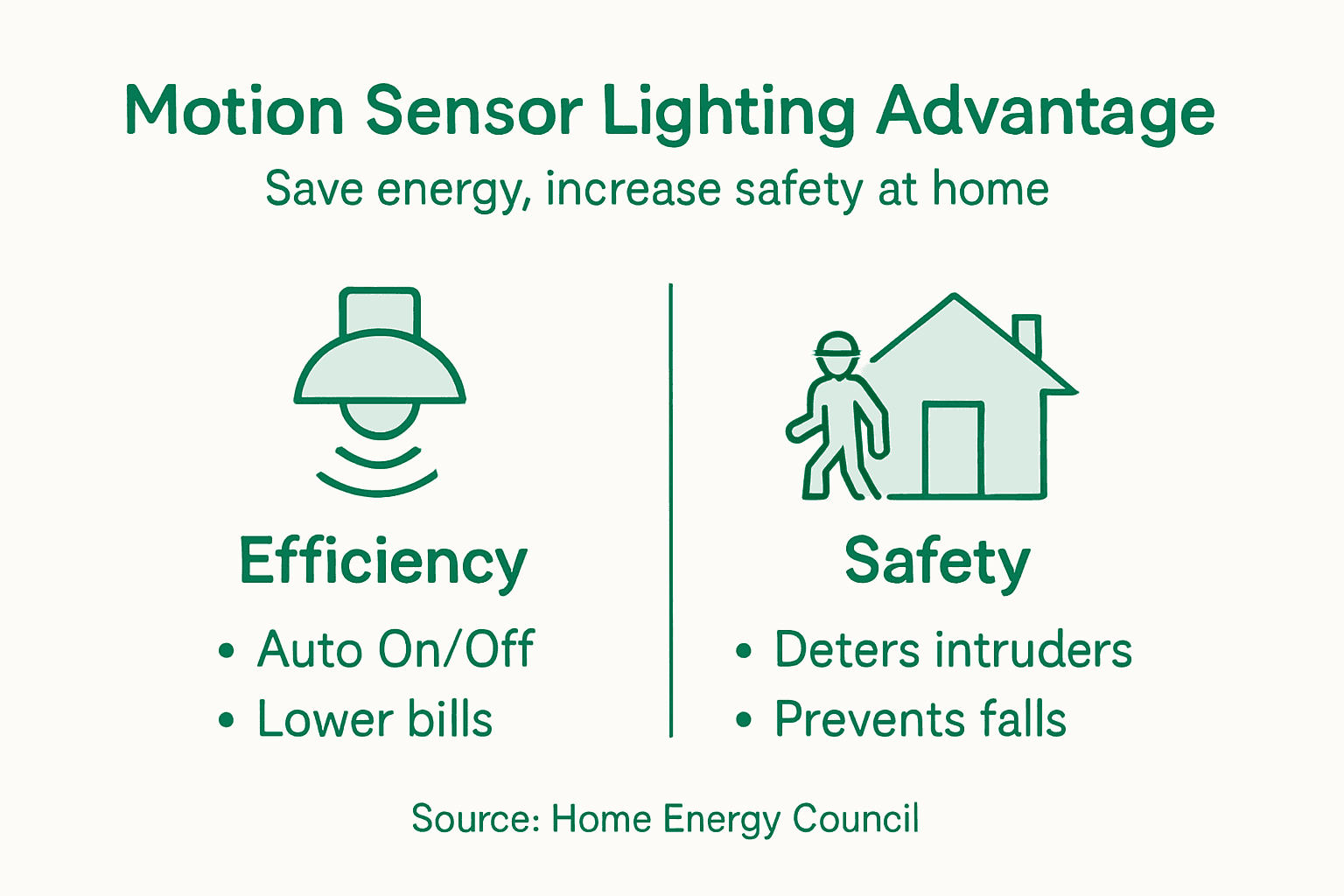
Pro tip: Install motion sensor lights in high-traffic areas like hallways, staircases, and garages to maximize both energy savings and safety benefits.
Navigating the installation of motion sensor lights requires careful planning and understanding of associated costs and potential challenges. Motion sensor light installation costs can range significantly, typically between $100 and $350, depending on the complexity of the project, sensor type, and specific home requirements. Homeowners should budget for both equipment and potential professional installation, keeping in mind that more advanced smart lighting systems with integrated features will command higher prices.
Installation complexity varies dramatically based on the type of motion sensor lights chosen. Wireless battery-powered options offer the simplest DIY installation, requiring minimal technical expertise and no electrical modifications. Hardwired systems demand more sophisticated electrical knowledge and typically require professional installation to ensure safety and compliance with local building codes. Common installation mistakes include improper sensor placement, incorrect angle settings, and failing to account for environmental factors like pet movement or nearby vegetation that might trigger false activations.
Budget-conscious homeowners should consider a strategic approach to motion sensor light installation. Basic battery-operated models can cost as little as $20-$50, while advanced smart systems with app connectivity and multiple sensors might range from $150-$500. Outdoor installations typically require more robust weatherproof models, which increase overall expenses. Critical factors influencing installation costs include existing electrical infrastructure, complexity of wiring, number of sensors required, and whether professional electrician services are needed to complete the project safely and effectively.
Pro tip: Always conduct a thorough site survey before installation, mapping out potential sensor locations and testing detection zones to minimize false triggers and maximize coverage.
Traditional lighting systems and motion sensor lights represent fundamentally different approaches to home illumination, with significant variations in energy consumption, functionality, and overall efficiency. Motion sensor lighting technologies demonstrate substantial advantages over conventional static lighting by activating only when movement is detected, dramatically reducing unnecessary electricity usage and operational costs.
The financial implications of switching from traditional to motion sensor lighting are profound. While initial installation costs for motion sensor systems are higher, the long-term savings make them an economically intelligent choice. Traditional lights consume electricity continuously, regardless of occupancy, whereas motion sensor lights operate selectively - illuminating spaces only when needed. This targeted approach can reduce lighting-related energy consumption by up to 75%, translating into significant annual savings for homeowners. Moreover, motion sensor lights typically utilize LED technology, which further enhances their energy efficiency compared to traditional incandescent or fluorescent lighting options.
Beyond pure economic considerations, motion sensor lights offer enhanced security and convenience that traditional lighting systems cannot match. Unlike static lighting that remains constant, motion sensor lights create dynamic illumination patterns that can actively deter potential intruders. The sudden activation of lights in response to movement provides an unexpected deterrent effect, making homes appear more actively monitored. Additionally, motion sensor lights eliminate the need for manual switching, providing hands-free convenience in areas like hallways, garages, and exterior pathways where carrying items or navigating in the dark can be challenging.
Compare key differences between traditional and motion sensor lighting systems:
| Criteria | Traditional Lighting | Motion Sensor Lighting |
|---|---|---|
| Operation | Manual switch | Automatic, sensor-activated |
| Energy Efficiency | Continuous use | Only on when needed |
| Security Enhancement | Constant illumination | Activates for unexpected motion |
| Installation Cost | Generally lower upfront | Higher, but long-term savings |
| Maintenance Frequency | Routine bulb changes | Less frequent, longer LED life |
| Suitability for Smart Homes | Rarely compatible | Highly compatible with smart tech |
Pro tip: Compare your current lighting electricity costs with potential motion sensor alternatives to calculate precise long-term savings before making a full home transition.
Struggling with high energy bills or unreliable lighting that fails to react when you need it most Are you looking to boost home security and safety with the convenience of hands-free illumination Our article explained the many benefits and smart features of motion sensor lights including energy savings and enhanced protection Now you can bring those advantages directly into your home with ease
Explore the Smart Motion Sensor Lights Collection to discover wireless, rechargeable options designed for quick, tool-free installation These lights adapt seamlessly to your lifestyle with adjustable sensitivity and daylight detection helping you prevent false triggers from pets or outdoor movement Feel the confidence of a well-lit home while reducing electricity use dramatically
Take the next step toward a safer, smarter, and more energy-efficient home. Visit Try Illuminate today to browse our Best Sellers and transform your lighting with solutions that combine technology, convenience, and style. Don’t wait to experience the safety and savings you deserve.
Motion sensor lights enhance security by providing automatic lighting in dark areas when movement is detected. This unexpected illumination can deter potential intruders and reduce the risk of accidents around your home.
Motion sensor lights use specialized sensors, such as Passive Infrared (PIR), Ultrasonic, or Microwave technologies, to detect motion within a designated area. When movement is sensed, the lights activate automatically without manual intervention.
You can install battery-operated motion sensor lights yourself as they require minimal technical expertise. However, hardwired systems typically need professional installation to ensure safety and compliance with building codes.
To minimize false activations, ensure proper placement and angle settings of the sensors, consider environment factors like pets or vegetation that may trigger them, and adjust sensitivity levels based on your specific needs.

Why Automate Home Lighting: Enhance Safety, Efficiency, Comfort
Explore why automate home lighting matters. Learn about energy savings, safety, key features, costs, and smart DIY options for modern homes.
Read more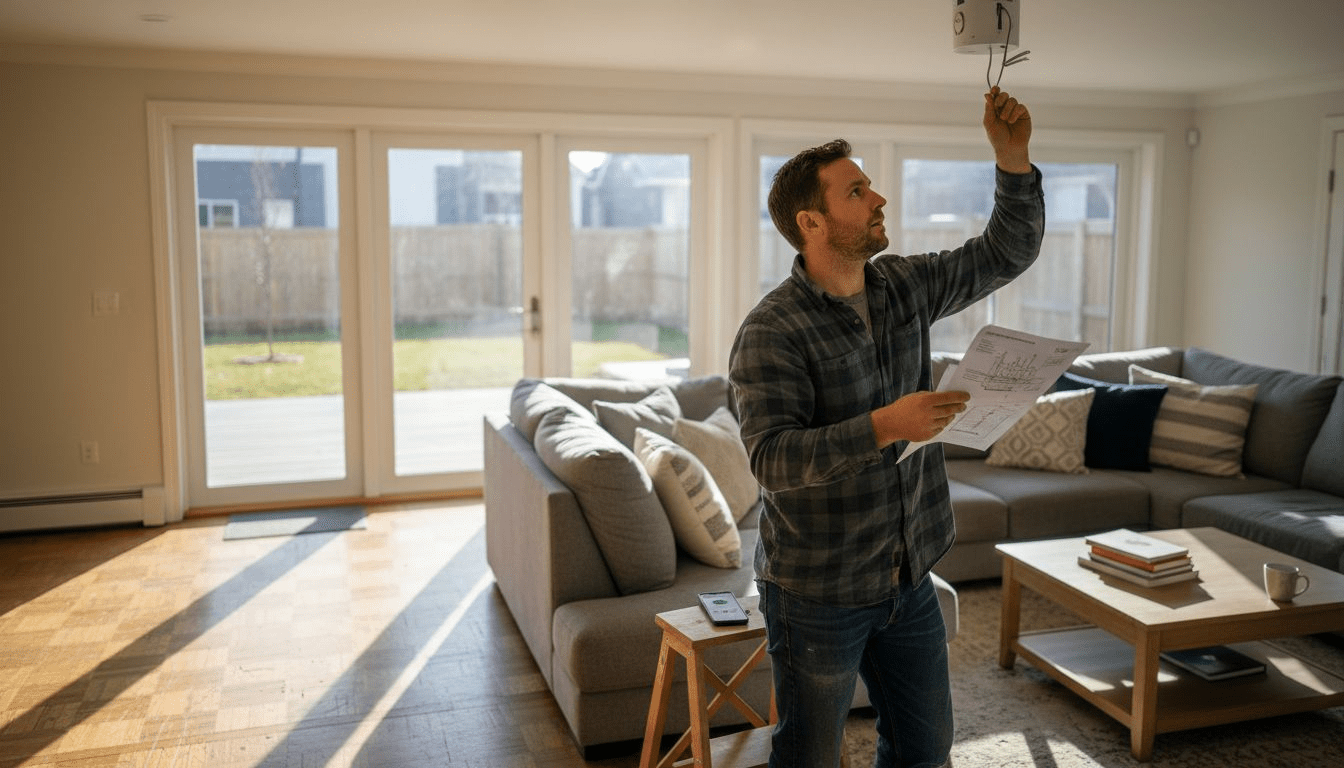
Wireless Lighting Installation Process for Smart Homes
Learn the complete wireless lighting installation process for smart homes. Follow simple step-by-step actions to easily upgrade and verify your lighting system.
Read more